Last updated:
Short answer
Communicating in your own language in dental treatment lets you describe your complaint accurately, understand the treatment plan fully and ask your questions before giving your consent. The Estelion Medical team communicates in 16 languages. Asking for the written plan and instructions in a language you understand also reduces the risk of misunderstanding. That way you know what you are agreeing to when you decide.
When planning dental treatment abroad, there is one more matter to ask about before price and dates: in which language will you speak with the team? Being able to communicate in your own language in dental treatment is more than a convenience; because agreeing to treatment, describing the complaint you have and following healing instructions correctly all depend on being understood. In this article we explain at which stages of the treatment process language becomes important and what you can look for in good communication.
Why does communicating in your own language matter in dental treatment?
Dental treatment is often a plan with several stages, and you need to make a decision at each stage. Consent given without truly understanding the options, the possible limitations and the care requirements that the dentist explains can lead you to the wrong expectation. In the same way, if you cannot describe your complaint fully, the dentist may have to make an assessment with incomplete information.
The US Centers for Disease Control and Prevention (CDC) recommends that people planning healthcare abroad prepare in advance, obtain copies of their medical records and, if needed, have them translated. This advice shows the importance of the process being written and understandable.
At which stages does it matter?
Language is at work at every step, from the start of the process to the end:
- First conversation and questions: So that you can describe your expectation and complaint comfortably.
- Preliminary assessment: So that the notes you share along with X-rays and photos are understood correctly.
- Examination and treatment plan: So that you understand the dentist’s explanations, the options and the scope of the plan.
- Consent forms: So that you know what you are reading before you sign.
- Instructions after the procedure: So that you can follow the rules on medication, care and eating and drinking correctly.
- Follow-up after you return: So that, if you have a complaint in your country, you can explain the situation clearly to the team.
How does communication work at Estelion Medical?
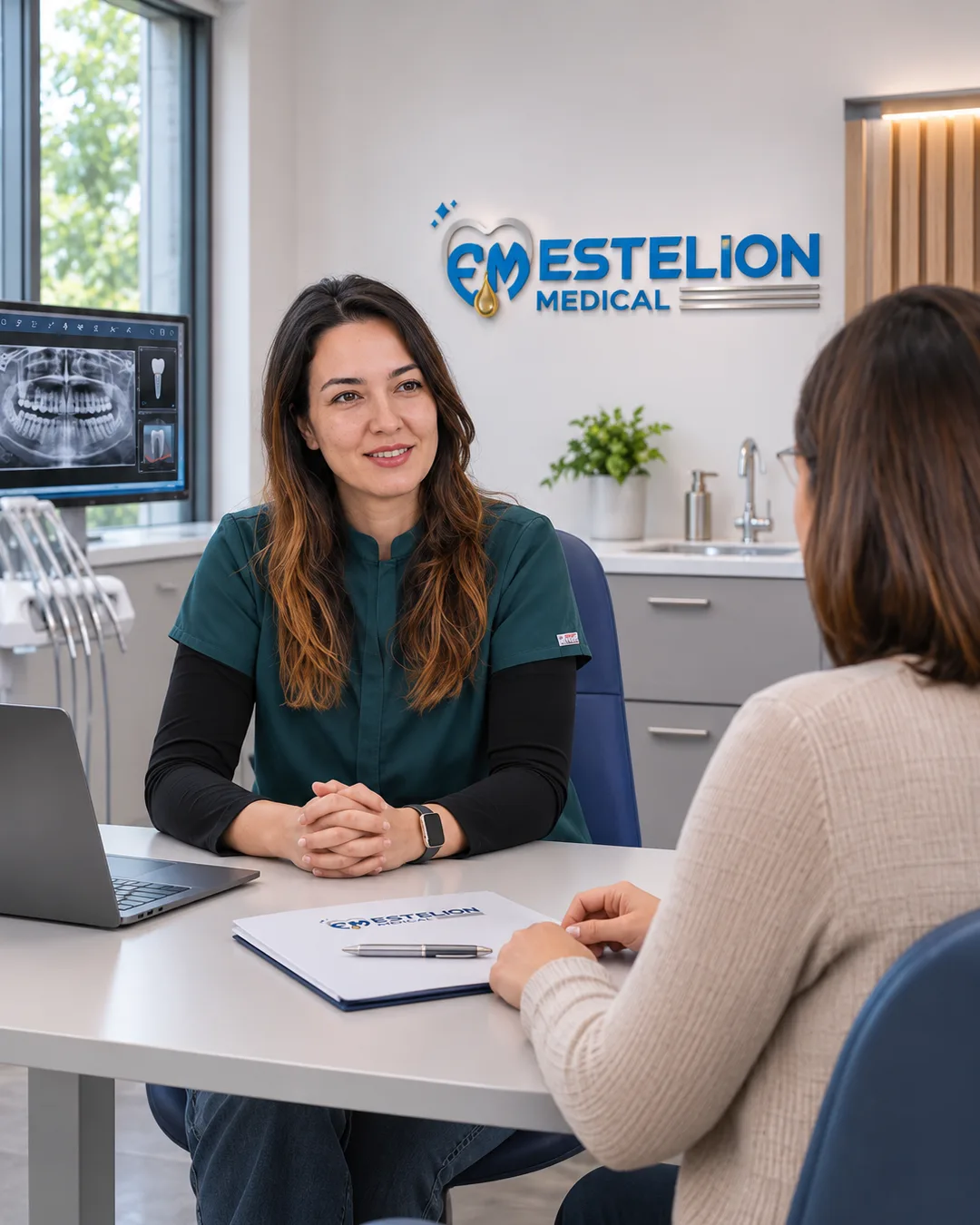
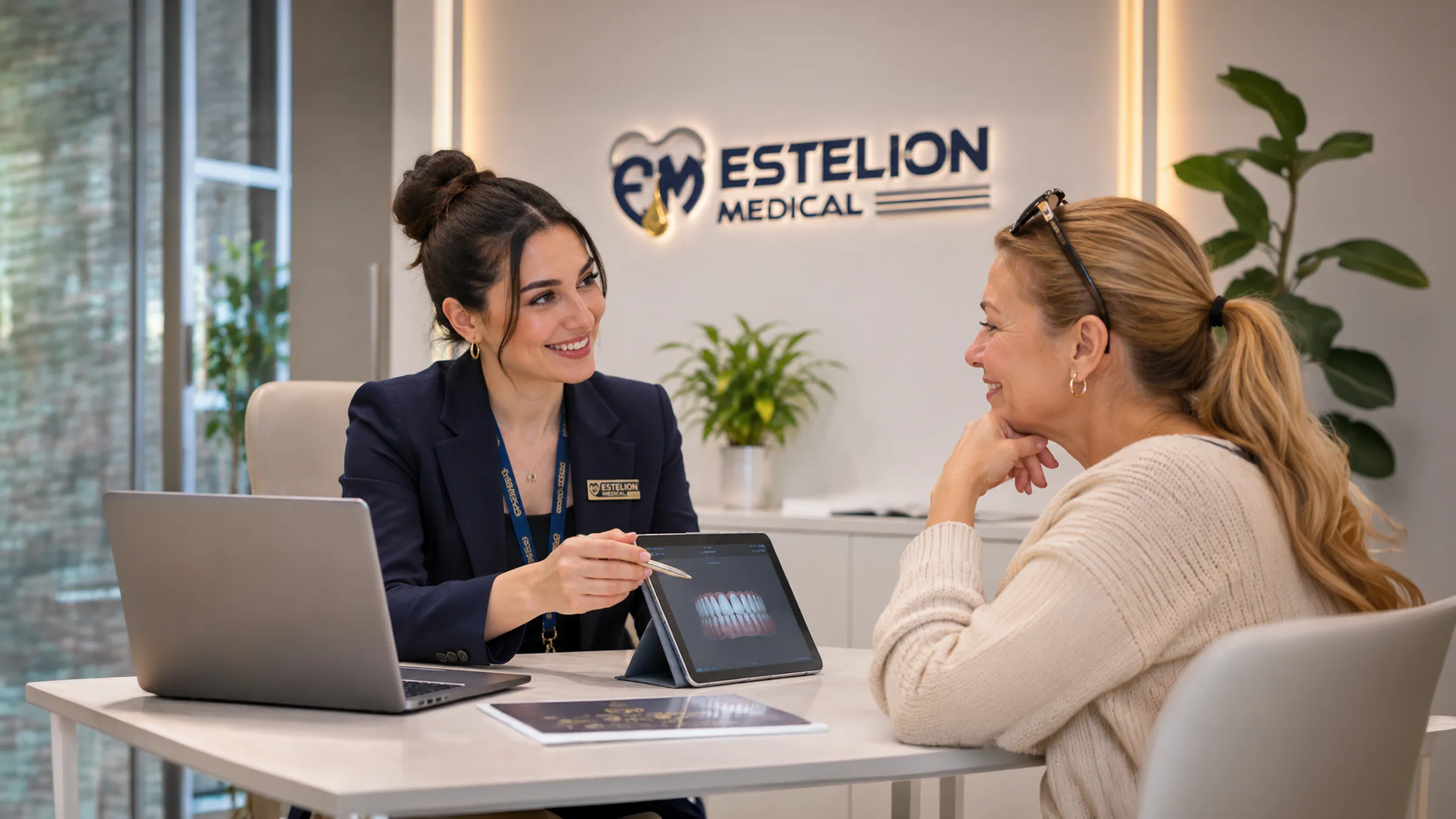
The Estelion Medical team communicates in 16 languages. The process starts with your patient advisor; they write and speak with you in your own language. We have described the role of your patient advisor in detail in our article who is a patient advisor in dental treatment, and what do they do? Your medical questions are passed to the dentist and the answer is relayed to you; so the information reaches you without losing anything.
If you want to be sure which language you can be served in, you can ask directly in the first conversation. Settling in which language and through which channel you will communicate before treatment starts is the right route.
Ask for written information in a language you understand
Spoken explanation is strong but can be forgotten. So it makes sense to ask for the treatment plan, the services included in the plan and the instructions after the procedure to be given in writing. Ask for written documents in a language you understand. If there is a phrase you do not understand, ask for an explanation before you sign or confirm.
The final treatment plan is determined by the dentist after the examination and the necessary assessments. Preliminary opinions are for information only; it is important that you hear this distinction clearly in your own language. You can find more on the plan in our article what should you look out for when having dental treatment in Türkiye?
Understanding medical terms
The language problem is not only everyday speech; medical terms can sound foreign even in your mother tongue. So concepts such as implants, bone grafts and sinus lifts should be explained in plain language and, if needed, with examples. Do not hesitate to ask when you do not understand a term. In good communication, asking questions is not something that bothers the other side but a natural part of the process.
For plain descriptions of the treatments you are curious about, you can look at our treatments page and the guides on the blog. Articles such as what should you look at when choosing an implant brand? help you form an idea before you talk to the dentist.
Are translation apps enough?
Translation apps on a phone are useful in everyday conversation; however, they may not be enough alone for important matters such as the treatment plan, the consent form and instructions after a procedure. A single word mistranslated can change an important detail such as how a medicine is to be used or what may not be eaten or drunk. So think of the app as a backup; it is a more reliable route to hear important matters from a team that speaks to you in your own language.
If you have a companion, they also need to understand the process. The person you come with can take notes on your behalf, remind you of questions and help you listen again to what the dentist has said. If your companion is comfortable in a different language, it is enough to tell your patient advisor from the start.
The advantages of written communication
A phone call is quick; written communication is lasting. Channels such as WhatsApp are also a suitable option for patients living in different time zones. Messages give you a record you can look back at; you can later see which plan was discussed and how a question was answered.
When sharing images, we recommend sending only what is necessary. Following the principle of data minimisation when sharing your personal health information is in the interest of both you and the team. We have described practical ways of sharing photos and X-rays in the article do I need to send an X-ray for the preliminary assessment?
After you return to your country
One of the moments when communication is most useful is after your return. Being able to describe a complaint, how long it has lasted and the medication you take clearly helps the dentist direct you correctly. In cases such as marked swelling, increasing pain or fever, you may need to seek local healthcare first; you can then let our team know. For the follow-up arrangements, see our article who will I be in contact with after I return to my country?
A short checklist for language
- Can you speak with your patient advisor in your own language?
- Are the treatment plan and instructions given in writing in a language you understand?
- Is it possible for you to ask the dentist questions and understand the answer?
- Can you understand the consent forms before you sign them?
- Do you know through which channel and in which language you will reach the team after you return?
How do you reach us?
To get information in your own language, you can fill in the contact form, call +90 530 309 13 06 or message the WhatsApp line +90 531 229 02 43. Our promise "fill in the form and we will call you today" also applies to forms sent in the evening and at weekends. You can see the steps of the process on our patient journey page.
Frequently asked questions
Which languages do you communicate in?
The Estelion Medical team communicates in 16 languages. It is enough to state your language in the first conversation; to be sure you can be served, you can ask about this from the start.
Can I get the treatment plan and instructions in writing?
Asking for a written plan and instructions is the right step. You can clarify the scope and details with your patient advisor before booking; the final plan is determined by a dentist after the examination.
Can I keep writing in my own language after I return to my country?
Yes. After you return, contact with your patient advisor continues by phone or WhatsApp; your medical questions are passed to the dentist and the answer is relayed to you.
This article is for general information only and does not replace a diagnosis or treatment recommendation. Suitability for treatment and your treatment plan are determined after a dental examination.

Author
Estelion Medical Editorial Team
Estelion Medical