
Last updated:
For someone who has lost all or most of their teeth, researching fixed prosthesis options, the two names most often met are All-on-4 and All-on-6. Both are based on the same idea; however, they differ in the number of implants, their placement and which jaw they suit. In this article we explain the differences in plain language and why the decision is made at the examination.
What is a fixed full-arch prosthesis?
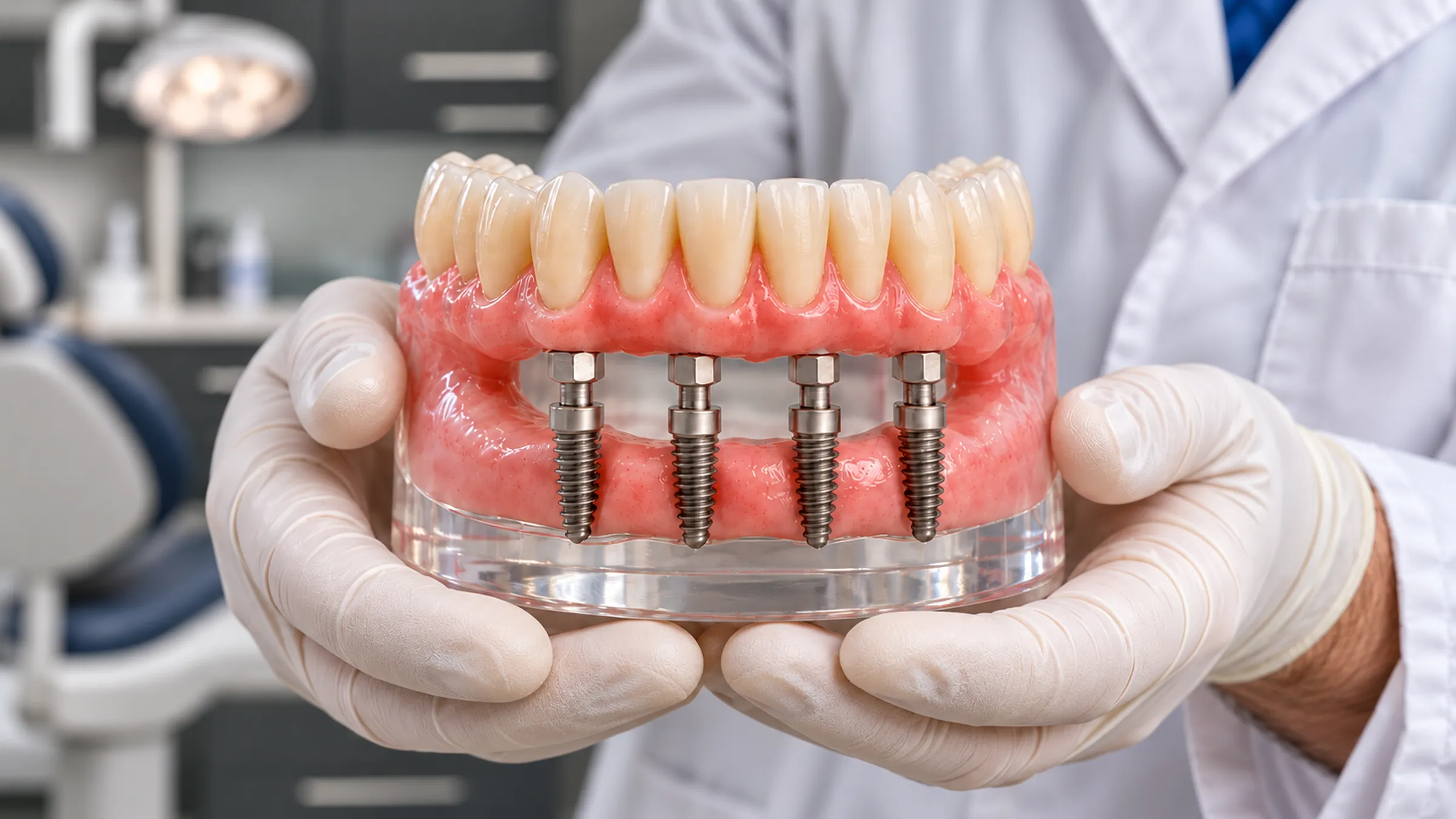
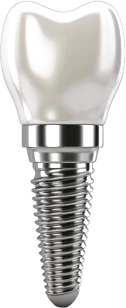
A dental implant is a small screw, usually made of titanium, placed in the jawbone to do the job of a tooth root. Over time the bone fuses around the implant; this process is called osseointegration. Once fusion is complete, the implants form a firm support for the prostheses fitted on top of them.
Rather than placing a separate implant for each tooth, in a jaw with no teeth a single bridge-like prosthesis carrying all the teeth can be made on just a set number of implants. All-on-4 and All-on-6 are the two main forms of this approach. The number in the name describes the number of implants planned for that jaw.
How does All-on-4 work?
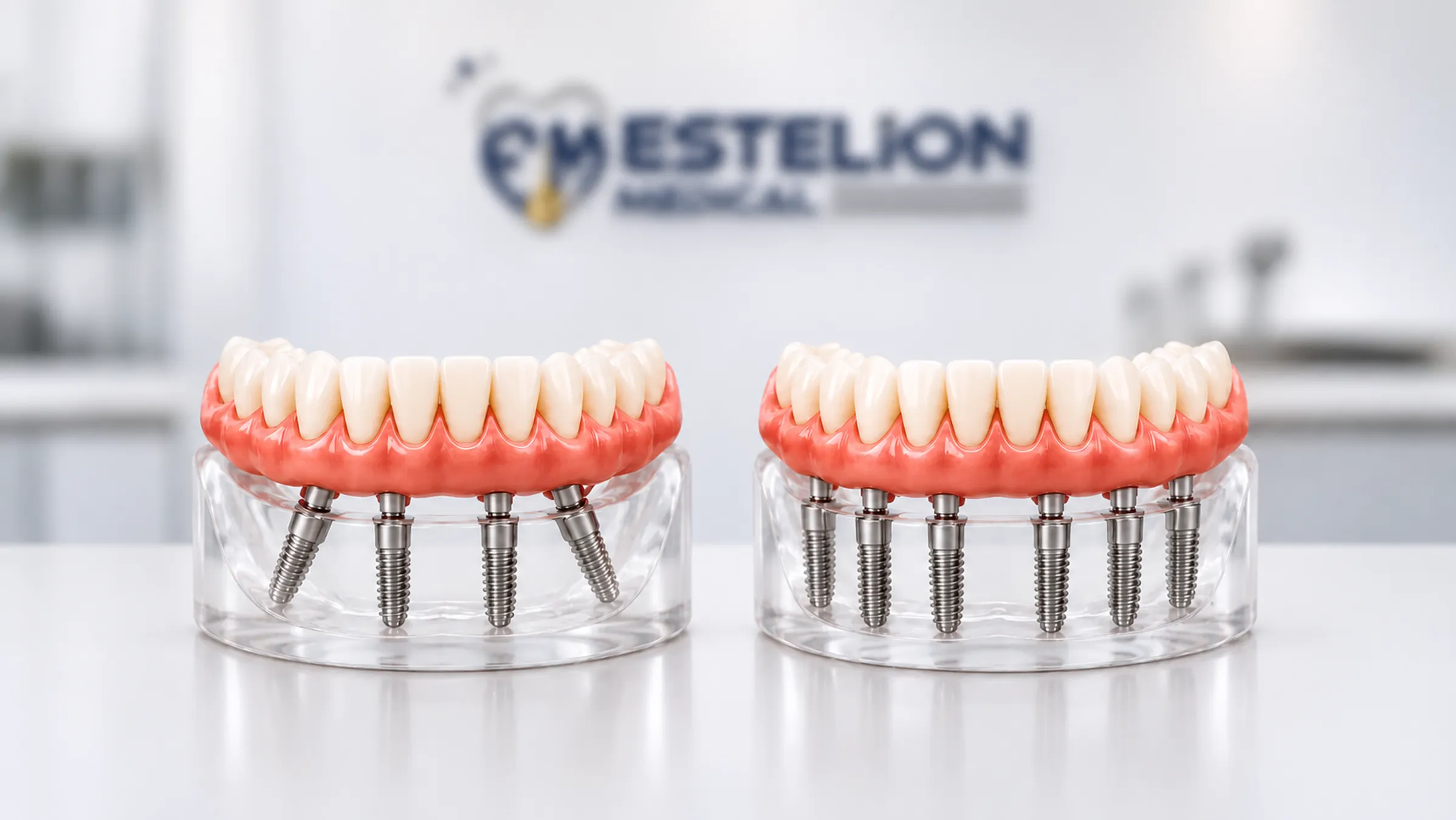
In All-on-4, four implants are planned for one jaw. Usually the front two implants are placed upright and the rear two at an angle. The purpose of angled placement is to make use of implants that are as long as possible and have wider contact with the bone, even when bone in the rear region has decreased. In this way, in some cases the need for additional bone procedures may be reduced.
The fixed prosthesis carried by four implants mostly covers the whole row of teeth. The dentist determines the design of the prosthesis according to the position of the implants and the structure of your jaw.
How does All-on-6 work?
In All-on-6, the same idea is carried out with six implants. Because the implants are spread over more points along the jaw, the load of the prosthesis is shared among more supports. Dentists may prefer this plan where bone volume and quality allow.
More implants does not always mean more suitable. Bone structure, jaw shape and general health are the main factors in this decision.
A number on its own is not an outcome. What matters is that a plan that suits your bone and your chewing pattern is prepared by the dentist.
Estelion Medical Editorial Team
The main differences at a glance
- Number of implants: Four implants are planned in All-on-4 and six in All-on-6.
- Placement: In All-on-4 the rear implants are mostly placed at an angle; in All-on-6 the implants are distributed more evenly along the jaw.
- Bone requirement: Six implants need enough bone volume. If there is little bone, additional procedures (for example bone augmentation) may come up; the dentist decides this.
- Prosthesis support: More implants spread the load of the prosthesis over more points. However, a properly planned All-on-4 is also a preferred method for suitable patients.
- Scope of the procedure: As the number of planned implants increases, the scope of the surgical procedure may also change.
This list is a general framework. Even two people can have different needs; so the choice of method is made after an examination, not from a brochure.
How is the choice made?
The decision starts with a clinical examination and imaging. A panoramic X-ray and, often, three-dimensional imaging show the height and width of the bone and how close it is to structures such as the sinus or nerves. In addition, the dentist assesses the following:
- The condition of the remaining teeth and gums, and whether any teeth need to be extracted
- Your general health and the medication you take regularly
- Smoking; smoking can adversely affect healing and the fusion of implants with bone
- Any habit of clenching or grinding your teeth
- Your oral care habits and whether you can attend follow-up appointments
- Your expectations: do you want something fixed, and what kind of smile and chewing pattern are you aiming for?
A fixed full-arch prosthesis may not be suitable for some patients. In this case the dentist explains a removable or different implant-supported prosthesis option. What matters is learning the advantages and limits of the options clearly and deciding together.
What other options are there?
A fixed full-arch prosthesis may not be the right solution for every patient. At the examination the dentist also explains other options:
- Individual implants: If the bone structure is favourable, a separate implant can be planned for each missing tooth.
- Implant-retained removable denture: A denture that can be taken out and put back in is held on a small number of implants.
- Conventional denture: The option that needs no implants and is taken out of and put back in the mouth.
Each option differs in how it is cared for, how it feels when chewing and in its process. Our aim is not to steer you to a method but to give you a picture you can understand, according to the results of the examination.
Common misunderstandings
- "More implants is always better." No. The suitability of a plan depends on bone structure and prosthesis design.
- "No care is needed." An implant prosthesis also needs regular cleaning and check-ups.
- "Everyone gets the same method." Plans are personal.
- "No examination is needed; the decision is made from an image." A preliminary opinion is possible, but the final plan is made after the examination.
How do the process and healing progress?
Treatment is mostly in stages. First the implants are placed. In some cases the dentist may plan a temporary prosthesis in the same session; this is a decision that varies with the condition of your bone and gums. A healing period is then needed for the bone to fuse with the implants. The length of this period varies from person to person and can usually run to several months. The final prosthesis is prepared and fitted after this period, with the dentist’s approval.
Because of the healing period, treatment for patients coming from abroad is often planned as two separate visits. Your dentist determines the dates; we prepare the flight, hotel and transfer arrangements with you around this schedule. Your patient advisor can communicate with you in 16 languages from the very first day.
Care and follow-up
A full-arch implant prosthesis also needs regular care. Brushing your teeth, cleaning around the implants with interdental brushes or the tools your dentist recommends, and going to follow-up check-ups are part of healing and of the health of the tissue around the implants. The dentist shows you how to clean your prosthesis.
After you return to your country, it also helps to have regular check-ups with your local dentist. In follow-up after treatment, your patient advisor helps with communication between you and the dentist.
What can be prepared before you come?
Full-arch planning needs detailed information. Gathering the following before you come speeds up the process:
- A recent panoramic X-ray, if you have one
- Information about your existing dentures, bridges or implants (when and where they were made)
- The medication you take and your chronic conditions
- An honest note about your smoking and alcohol habits
You can share this information with your patient advisor; a dentist can form a preliminary opinion. This opinion is for information only and does not replace the final plan.
What if there is not enough bone?
In jaws that have been without teeth for a long time, bone volume may have decreased. In such cases the dentist may recommend additional procedures such as bone augmentation, or may choose a different method. Such procedures can affect the length of treatment and the healing period; the details become clear after the examination.
Questions you can ask at the examination
- With my bone structure, which options are possible and which are not?
- Will an additional bone procedure be needed?
- Which brand of implants and which prosthesis material will be used?
- In how many stages and visits will treatment be completed?
- How should I care for it at home, and how are follow-up check-ups planned?
- If there is a problem, who do I contact from my country, and how?
You can pass your questions to your patient advisor before you travel. For preliminary information, phone: +90 530 309 13 06, WhatsApp: +90 531 229 02 43. Treatments are carried out at our clinic; the final plan is determined after the dental examination.
Frequently asked questions
Is All-on-6 better than All-on-4?
No, no such generalisation can be made. Which method is suitable is determined by a dentist according to bone structure, jaw shape and general health.
Is treatment completed in a single visit?
The plan varies from person to person. Because a healing period may be needed for the implants to fuse with the bone, treatment is often planned in stages over more than one visit; your dentist determines this.
This article is for general information only and does not replace a diagnosis or treatment recommendation. Suitability for treatment and your treatment plan are determined after a dental examination.

Author
Estelion Medical Editorial Team
Estelion Medical