
Last updated:
There are three main options for treating missing teeth: an implant placed in the jawbone, a bridge that rests on the neighbouring teeth, and a removable denture that is taken out and put back in. Which is suitable is determined at the dental examination according to the position of the missing tooth, the condition of the neighbouring teeth and gums, your bone structure and your expectations. In this article we compare the three routes in plain language.
For someone who has lost one or a few teeth, the first question is usually: "How do I fill the gap?" All three routes have their advantages and limits; none is right for every person. In this article we compare the options in plain language and explain which factors the decision depends on. The aim is not to steer you to a method but to help you go into the examination better prepared.
What options are there for missing teeth?
Replacing missing teeth can make chewing and speaking easier, and can also bring comfort in terms of appearance. The NHS information page also states that, for missing teeth, bridges and implants are used as alternatives to dentures. In brief:
- Implant: A support placed in the jawbone that does the job of a tooth root; a crown, bridge or denture is made on top of it.
- Bridge: A prosthesis that is fixed to the teeth on either side of the missing tooth and "bridges" the gap.
- Removable denture: A prosthesis that rests on the gums and, where needed, the remaining teeth, and can be taken out of and put back in the mouth.
Implant: root support in place of the missing tooth
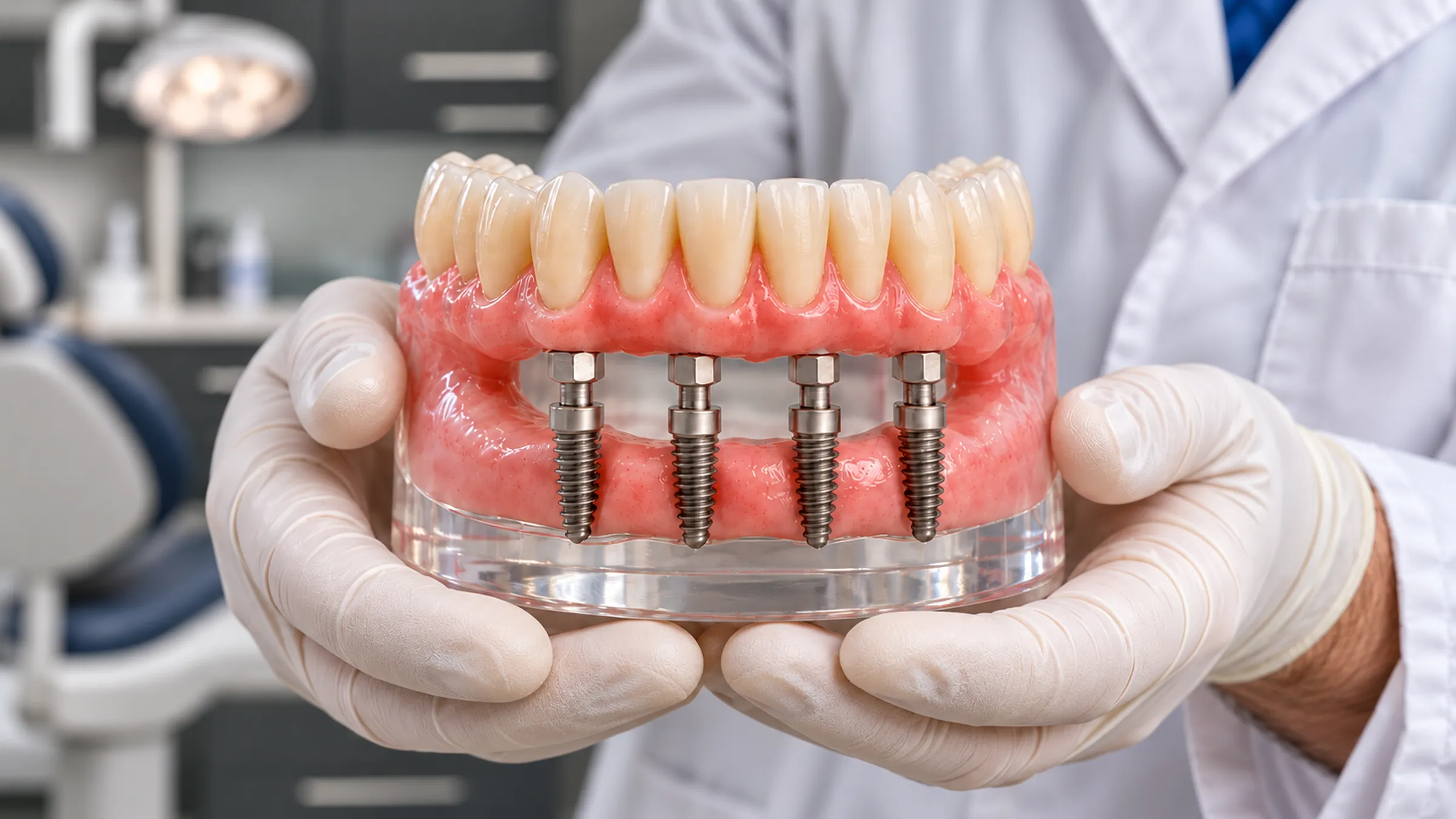
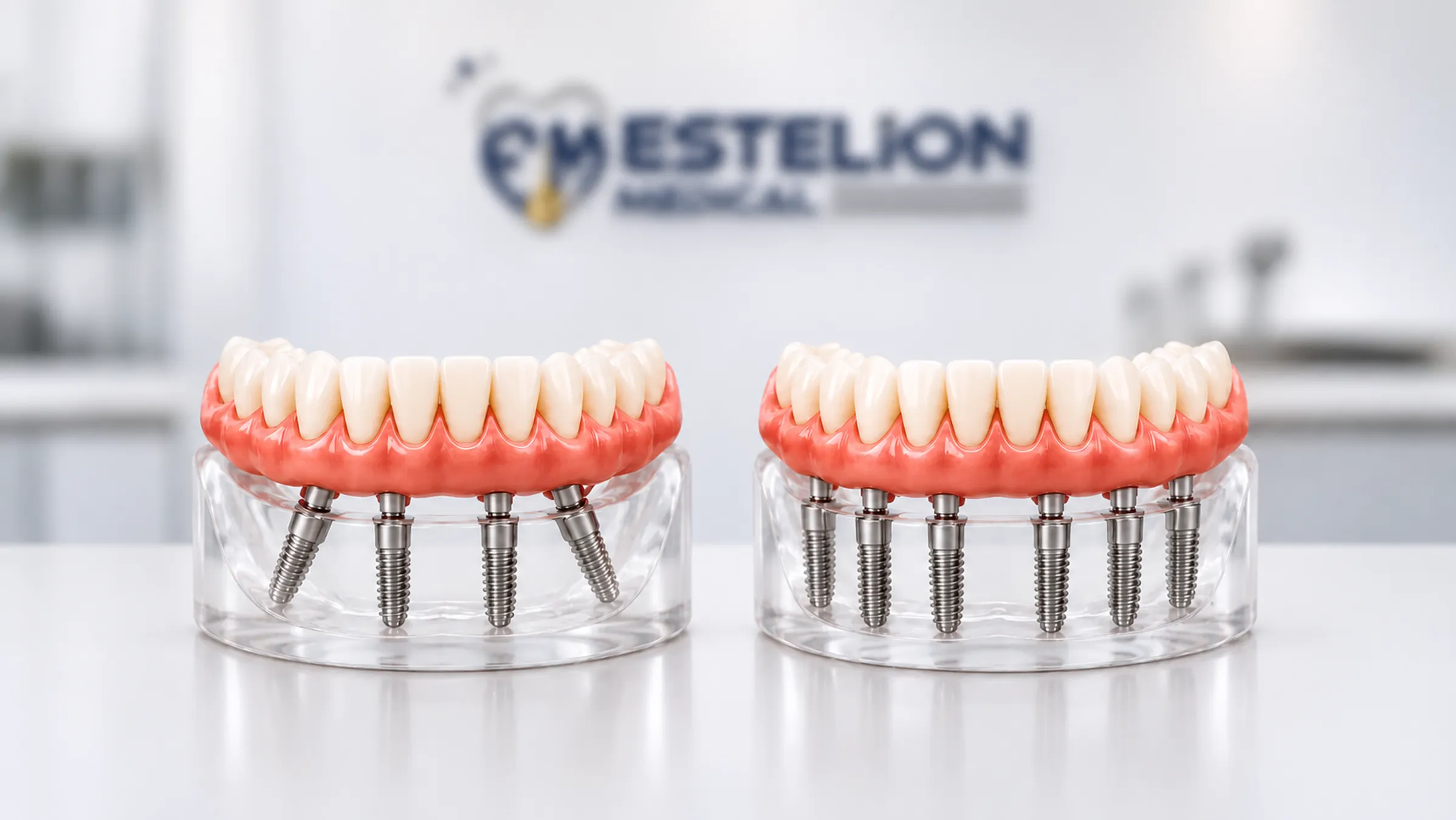
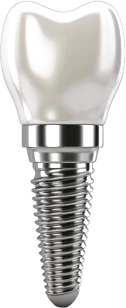
A dental implant is a screw made of titanium and other materials compatible with the body, placed surgically inside the jaw. Over time the bone fuses around the implant; this process is called osseointegration and, according to the ADA’s patient information page, takes time. Once fusion is complete, a crown or bridge is made on top of the implant. In some patients the implant and temporary teeth can be placed at the same visit; this also depends on the dentist’s assessment.
If a single tooth is missing, an implant does not require the neighbouring teeth to be cut down; the ADA also lists this as a reason for an implant. On the other hand, an implant is a surgical procedure. If bone volume is insufficient, bone augmentation may be needed (such as a bone graft and, in the upper jaw, a sinus lift). Uncontrolled chronic conditions and tobacco use can affect healing; for this reason your general health is also assessed. For treatments for one or a few teeth, have a look at our dental implants page.
Bridge: support from the neighbouring teeth
A conventional bridge is attached with crowns to the teeth on either side of the missing tooth. According to the ADA, a bridge takes support from the surrounding teeth, and only a dentist can remove a fixed bridge. So it matters that the teeth that support the bridge are sound. To prepare the supporting teeth, a certain amount of material is cut from their surface; the ADA also lists "not wanting sound tooth structure to be cut for a bridge" as one of the reasons for preferring an implant.
The advantage of a bridge is that in most cases it does not need surgery and the process does not depend on bone procedures. If the neighbouring teeth have already been treated with a crown or a large filling, a bridge can be a reasonable option. Bridge materials include metal-supported and metal-free options; for metal-free options, you can see our article on zirconia crowns.
Removable denture: the option you take out and put back in
Removable dentures can replace one missing tooth, a few teeth (a partial denture) or all the teeth (a full denture). According to the NHS, losing teeth can make eating and speaking difficult, and dentures help with these problems. Dentures generally do not need surgery, and the making process can be short.
On the other hand, a removable denture means a period of getting used to it for the patient. The ADA states that new dentures may feel strange for a few weeks, that mild irritation or sensitivity is common and that adjustments are made at check-up appointments. The NHS also writes that dentures can become loose as the gums and jawbone change over time, so regular check-ups are needed. The denture needs to be cleaned every day and stored at night as your dentist recommends.
None of the three options is "the most suitable for everyone". The suitable one is the one the dentist plans according to the current situation in your mouth.
Estelion Medical Editorial Team
Let’s put the options side by side
- Effect on neighbouring teeth: An implant does not take support from the neighbouring teeth; for a bridge, the neighbouring teeth need to be prepared; a removable denture may hold onto the remaining teeth with parts such as clasps.
- Surgery: An implant requires a surgical procedure; a bridge and a removable denture mostly do not.
- Use: An implant and a bridge are fixed. A removable denture is taken out and cleaned.
- Process: With an implant there is a healing period, and the dentist sets the plan. A bridge and a denture generally have fewer stages.
- Care: All three need regular cleaning and check-ups, in different ways. For implant care, see our article care after an implant.
This list is a general framework; individual circumstances can change the picture.
How is the decision made?
At the examination, the dentist examines the mouth clinically, makes use of imaging such as a panoramic X-ray and, where considered necessary, may ask for additional imaging. The main matters that affect the decision are:
- The position and number of the missing teeth
- The health of the neighbouring teeth and gums; any decay, crowns or fillings
- The height and width of the jawbone
- General health, regular medication and tobacco use
- A habit of clenching and grinding your teeth
- Oral care habits and whether you can attend follow-up appointments
- Your expectation: fixed or removable; which process are you comfortable with?
After the examination, the dentist explains one option or several. The final plan and the method to be used are determined by the dentist in Istanbul after this examination. Asking your questions freely at this stage matters for the right decision: such as the scope of the procedure, how many visits it needs, which care steps await you and how check-ups will be done when you return to your country.
How does the process progress in Istanbul?
After you fill in the form, your patient advisor calls you, listens to your questions and explains the preliminary assessment process. Treatments are carried out at our clinic; you can read who carries out treatment, where and how in the article where are treatments carried out. You can find what happens on the first day in the first day of treatment in Istanbul, and the travel preparation in our travel guide. If you need to make a plan for both jaws, it makes things easier to think about the options together with the article which treatment is suitable.
Where many teeth are missing, the subject can move from "missing teeth" to a full-arch question. In this case our article options in complete tooth loss can be a guide.
If several teeth are missing, or at the front
When several teeth next to each other are missing, the options can change. Instead of a separate implant for each tooth, a bridge on several implants can be planned; in some cases a removable partial denture may be considered more suitable. For gaps at the front, appearance and the shape of the gums also become important in the decision; the smile line and the colour and length of the neighbouring teeth are assessed together with the dentist. If your aesthetic expectations are high, saying so openly at the examination helps the dentist make the plan accordingly. For smile-focused planning, you can see the article how is a smile design planned.
The condition of the remaining teeth is also part of this plan: decay, gum disease or cracked teeth may have to be treated first. In other words, the treatment order sometimes goes "oral health first, then replacing the missing teeth".
Common misunderstandings
- "An implant is always the right route." No. Bone structure, general health and expectations change the choice; for some patients a bridge or a denture may be more suitable.
- "If a bridge is made, nothing happens to the neighbouring teeth." With a conventional bridge the supporting teeth need to be prepared; so the health of the neighbouring teeth plays an important part in the decision.
- "A removable denture is a temporary solution." Not every denture is temporary; however, care and regular check-ups are needed for comfortable use.
- "No care is needed once it is fitted." Whichever option it is, daily cleaning and check-ups are needed.
In deciding, you need to base it on the condition of your own mouth rather than on brochures or other people’s experiences; because no two people’s situations are the same.
Before you come for an examination
- Note when and why the missing teeth were lost.
- Prepare a list of the medication you take regularly and any known conditions.
- If you have had a denture or implant made before, bring the documents or records with you.
- Write down your questions: fixed or removable, how many visits, the healing period, care.
This article is for general information only. The treatment decision is made by the dentist after the examination.
Frequently asked questions
For a missing tooth, is an implant or a bridge more suitable?
This varies with the position of the missing tooth, the condition of the neighbouring teeth and the bone structure. An implant does not take support from the neighbouring teeth but requires surgery; a bridge requires the neighbouring teeth to be prepared. The final decision is made after a dental examination.
What is the basic difference between a removable denture and an implant?
A removable denture is taken out of the mouth for cleaning and rests on the gums or the remaining teeth. An implant is a support placed in the jawbone, on which a fixed tooth can be made. Your dentist decides which is suitable.
What should I prepare before coming for an examination for my missing tooth?
It is enough to prepare a list of the medication you take and any known conditions, records of previous dental treatment, and your questions. Any necessary imaging and the final plan are determined at the examination in Istanbul.
This article is for general information only and does not replace a diagnosis or treatment recommendation. Suitability for treatment and your treatment plan are determined after a dental examination.

Author
Estelion Medical Editorial Team
Estelion Medical