
Last updated:
Short answer
Teeth whitening methods fall mainly into two: whitening carried out by a dentist in the clinic, and whitening done at home with custom-made trays under a dentist’s supervision. With both, the effect and the sensitivity vary from person to person. Whitening works only on natural teeth; the suitable method is chosen together with your dentist after a dental examination.
Teeth yellowing or dulling over time is very common, and whitening is one of the cosmetic dental treatments people ask about most. So what is the difference between teeth whitening methods, and when would you consider whitening in the clinic or at home? In this article we describe the two methods, possible side effects such as sensitivity, and the points to bear in mind before deciding.
Why do teeth change colour?
The American Dental Association (ADA) lists the main causes of tooth colour change as follows: foods and drinks containing colour pigments such as coffee, tea and red wine, tobacco use, age (as the enamel thins, the yellowish dentine beneath shows more), a blow to the tooth, certain medication, and chemotherapy or radiotherapy to the head and neck area.
The cause of the colour change also affects whether whitening will work. So the first step is to understand why your teeth have darkened.
How does whitening work?
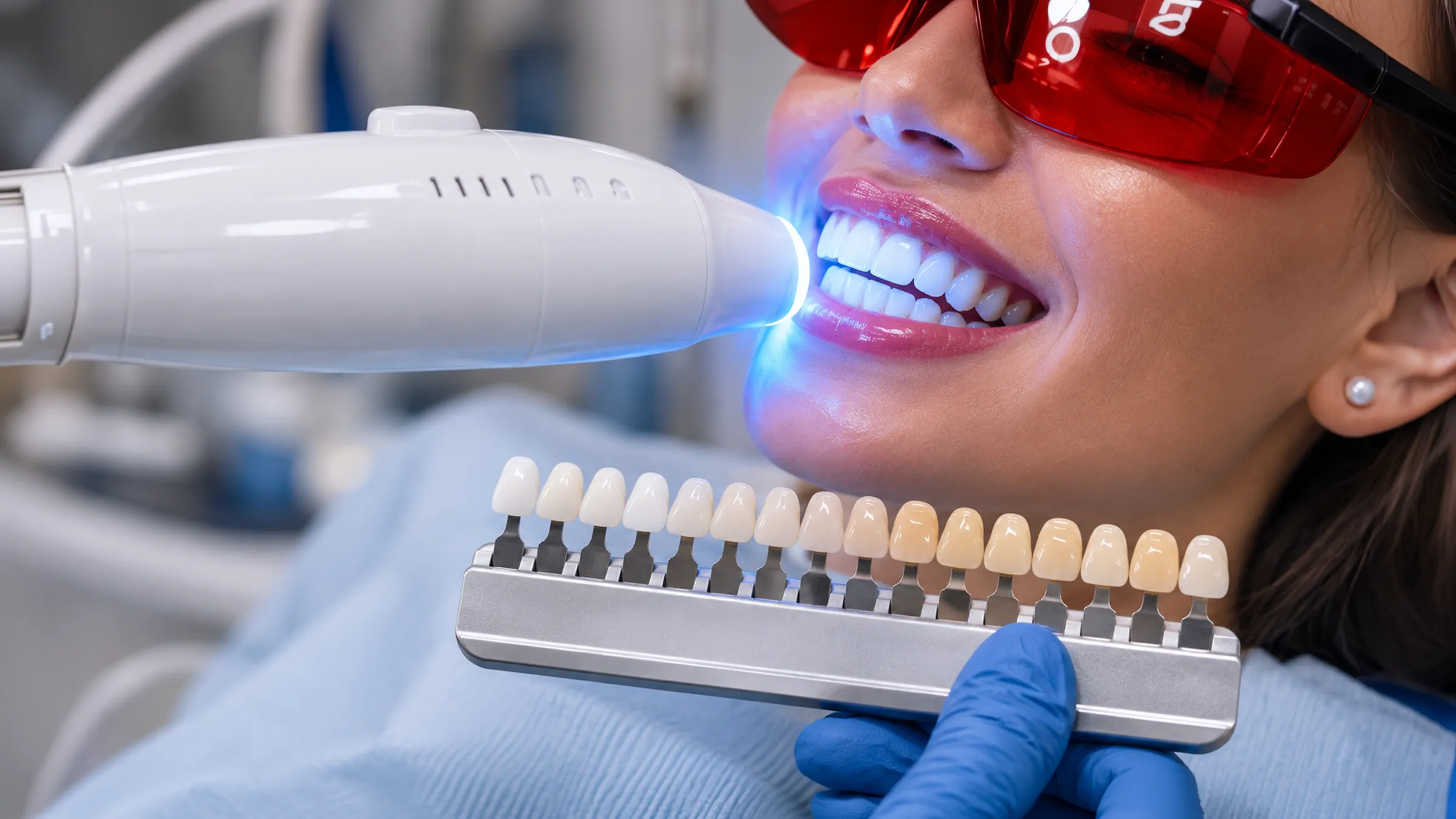
According to the ADA, whitening products contain hydrogen peroxide or carbamide peroxide. These substances break stains into smaller pieces so that the colour looks less intense. The NHS also states that whitening lightens the colour of the teeth using a gel and sometimes a laser.
Whitening does not have the same effect on every colour change. The ADA states that yellow tones can respond better, brown tones less, and grey tones perhaps not at all, and that it may also be ineffective for colour changes caused by medication or a blow. The result varies from person to person.
How is in-clinic teeth whitening done?
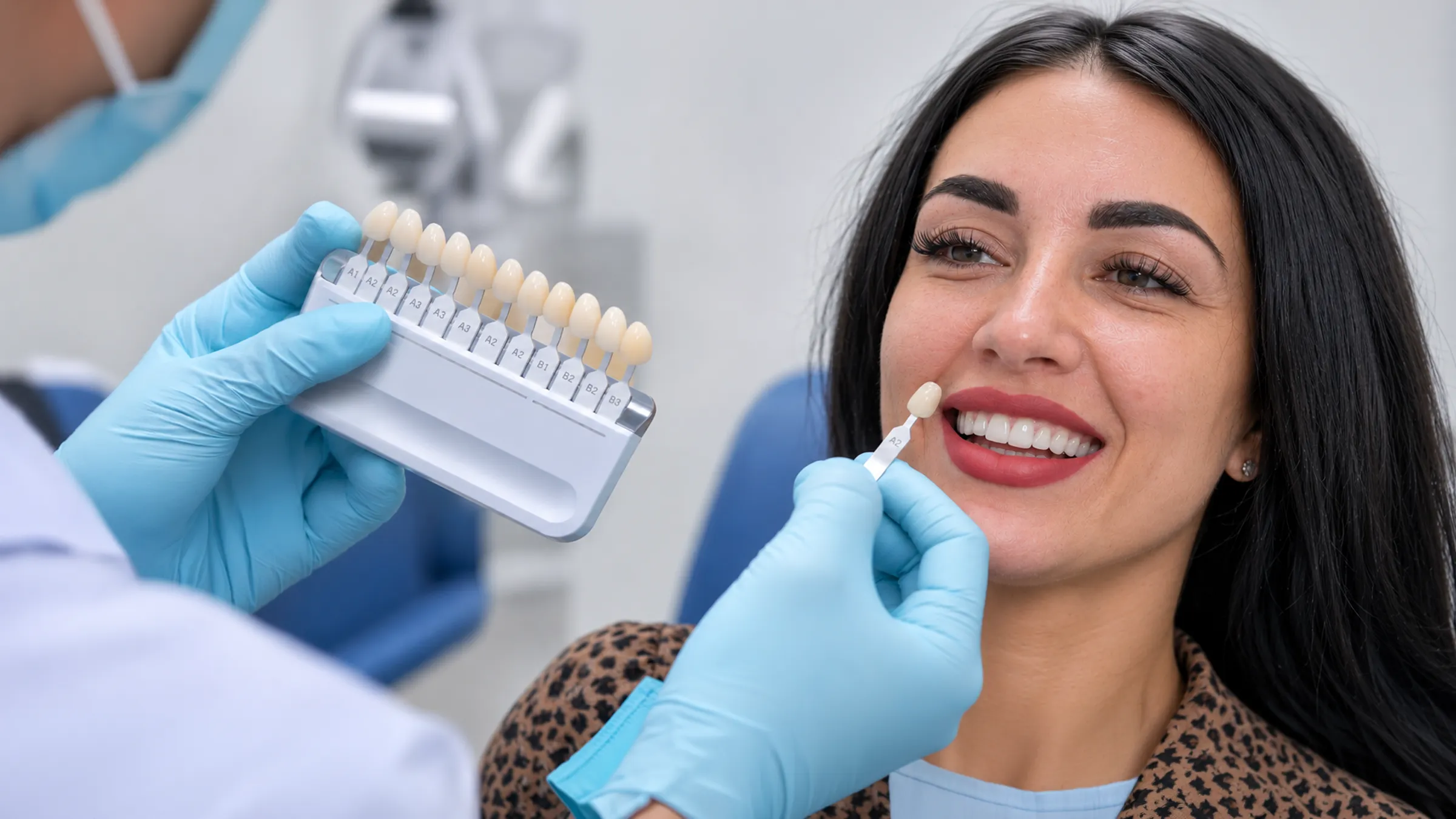
In-clinic whitening is carried out under the dentist’s supervision and, in the ADA’s words, generally requires a single visit. The dentist first protects your gums with a protective gel or a rubber barrier, then applies the whitening gel to the teeth. The NHS states that in whitening carried out in a dental setting the gel can be used together with a laser, and that the procedure is generally completed in one appointment lasting about 1 to 2 hours.
When is it considered?
- When you want to see a result in a short time and your schedule is limited (for example, patients planning a trip)
- If you think you would find it hard to use trays regularly at home
- If you prefer the dentist to supervise the application closely
How is at-home teeth whitening done?
The dentist prepares custom-made trays from an impression of your mouth and explains how, and for how long, to use the whitening gel. The ADA states that this method may be preferred by those who want to whiten at home, at their own pace but under a dentist’s guidance, and that it can last from a few days to several weeks. The NHS explains that with daily use of the kit with trays provided by the dentist for a period, the teeth are lightened gradually, and that the trays are generally worn over several weeks.
When is it considered?
- If you prefer slower, step-by-step progress
- If you have sensitivity and the dentist considers this method suitable
- If you want to do it in your own home, but under a dentist’s supervision
With this method it is important that the trays fit properly, that the gel is used as the dentist says and that the gums are protected. So you should use the product under your dentist’s guidance, not at random.
Teeth whitening methods: a brief comparison of clinic and home
- Duration: In the clinic, generally a single visit; at home, days or weeks.
- Supervision: In the clinic the dentist is with you throughout; at home you carry out the application and the dentist gives instructions.
- Trays: For the at-home method custom-made trays are prepared; in the clinic these may not be needed.
- Sensitivity: Temporary sensitivity may occur with both methods; it varies from person to person.
- Result: With both methods the result depends on the tooth structure and the cause of the colour change.
In some cases the dentist may also recommend the two methods together. Which is suitable is determined after the examination.
Shop-bought products and other routes
The ADA states that standard toothpastes and approved stain-removing toothpastes only remove surface stains and do not change the colour of the tooth. The concentration of the active ingredient in whitening products bought in shops is lower than what a dentist uses. The NHS warns that whitening carried out at beauty salons, or with kits bought from a pharmacy or online, can harm the teeth and gums, and describes whitening with a dentist’s kit or in a dental setting as the safer route. So you need to consult a dentist before using any.
Possible side effects
The NHS states that, because strong chemicals are used even in whitening under a dentist’s supervision, some side effects can occur: sensitivity to cold or sweet things, sensitivity of the gums or throat irritation, and white patches on the gums. These are generally short-lived. If it is troublesome, you should see your dentist.
Who should not have whitening, or should speak to a dentist first?
- People whose tooth or gum health is not suitable: decay and gum problems are treated first.
- People who are pregnant or breastfeeding: the NHS does not recommend whitening during this time.
- Younger age group: the NHS states that whitening is not carried out at 17 and under.
- On crowns, veneers, fillings or implants: the ADA and NHS state that whitening does not change their colour.
What is discussed at the examination before whitening?
The NHS states that before whitening, the dentist should check that your teeth and gums are healthy. At the examination the following are generally covered:
- Whether you have sensitivity, gum problems or decay
- Restorations previously done, such as fillings, crowns and veneers
- The medication you take, and whether you are pregnant or breastfeeding
- What you expect from whitening and your colour goal
- The length of the method, its possible side effects and care afterwards
All of this information is used when deciding which method is suitable for you. Talking about your expectations with the dentist beforehand helps you make a realistic plan.
Whitening and other cosmetic treatments
If you are thinking of having crowns or veneers, whitening is generally planned before these procedures, because ceramic restorations cannot be lightened afterwards. The colour of the neighbouring teeth is determined beforehand and the restoration is prepared to match this colour. For details, have a look at our articles on porcelain veneers, zirconia crowns and smile design. Our Hollywood Smile article, which looks at the smile as a whole, covers this subject.
After whitening and aftercare
After whitening, the colour of the teeth may gradually return; how long this takes depends on the person’s habits. It helps to follow the dentist’s advice and to bear in mind the following:
- Cutting down on drinks that leave colour, such as coffee, tea and red wine, and staying away from tobacco
- Brushing twice a day and using dental floss
- Using the toothpaste or treatments the dentist recommends for sensitivity
- Regular dental check-ups and, if needed, scale and polish
Common misunderstandings
"Whitening always brings the teeth to the same shade." No; the result differs according to the person’s tooth structure and the cause of the colour change. "Whitening lightens everything." Crowns, veneers and fillings are not lightened. "No examination is needed for whitening." If tooth and gum health are not suitable, these need to be treated first.
What should you expect from whitening in Istanbul?
Treatments are carried out at our clinic. First the dentist examines your teeth and gums, assesses the cause of the colour change and recommends a suitable method. You can get brief information about teeth whitening on our treatment page. If you are planning the process from abroad, your patient advisor gives preliminary information from your photos; the final decision is settled at the examination in Istanbul. To research more generally which treatment is suitable for you, you can also look at our article which treatment is suitable.
Frequently asked questions
Does whitening change the colour of crowns and veneers?
No. Whitening works only on natural teeth; it does not change the colour of crowns, veneers, fillings or implants.
Is there sensitivity after whitening?
Short-lived sensitivity may occur; it varies with the person and the method. See your dentist if it is troublesome.
Should whitening be done in the clinic or at home?
The duration and the way of applying the two methods differ. Which is suitable is determined with your dentist after an examination of your teeth and gums.
This article is for general information only and does not replace a diagnosis or treatment recommendation. Suitability for treatment and your treatment plan are determined after a dental examination.

Author
Estelion Medical Editorial Team
Estelion Medical