
Last updated:
The zirconia crown is one of the options most often mentioned in cosmetic and restorative dental treatment. Even so, it does not give the same result for everyone and may not be suitable for every tooth. In this article we explain what zirconia is, when it is preferred, how the shade is chosen and what to bear in mind before deciding.
What is a zirconia crown?
A crown is an artificial covering that completely surrounds the visible part of a tooth, restoring its shape, size and appearance. The American Dental Association (ADA) states that crowns can be used to support teeth with large fillings or too little tooth tissue remaining, to protect a weak tooth, to repair a broken tooth, to cover discoloured or irregularly shaped teeth and to cover an implant.
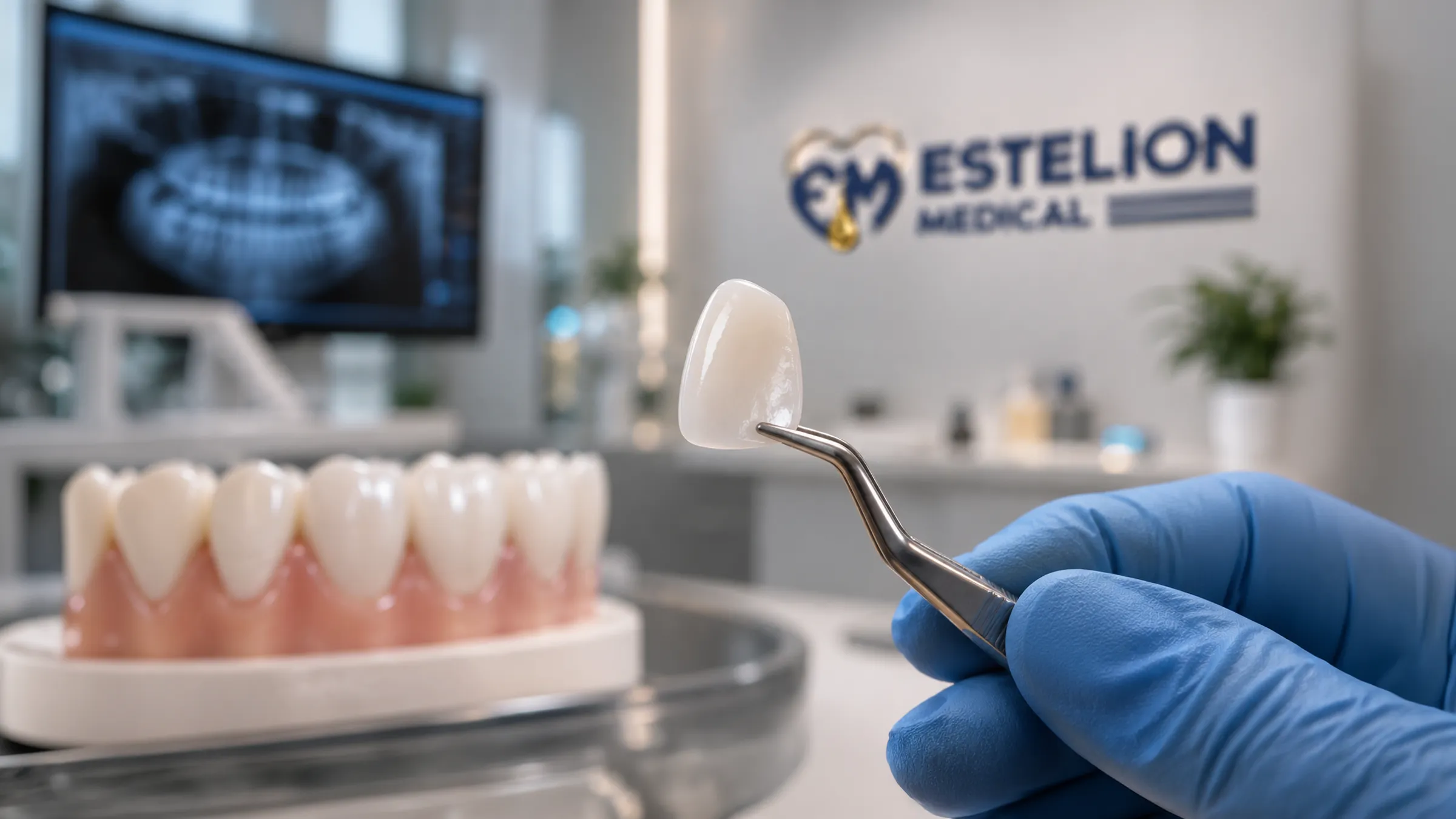
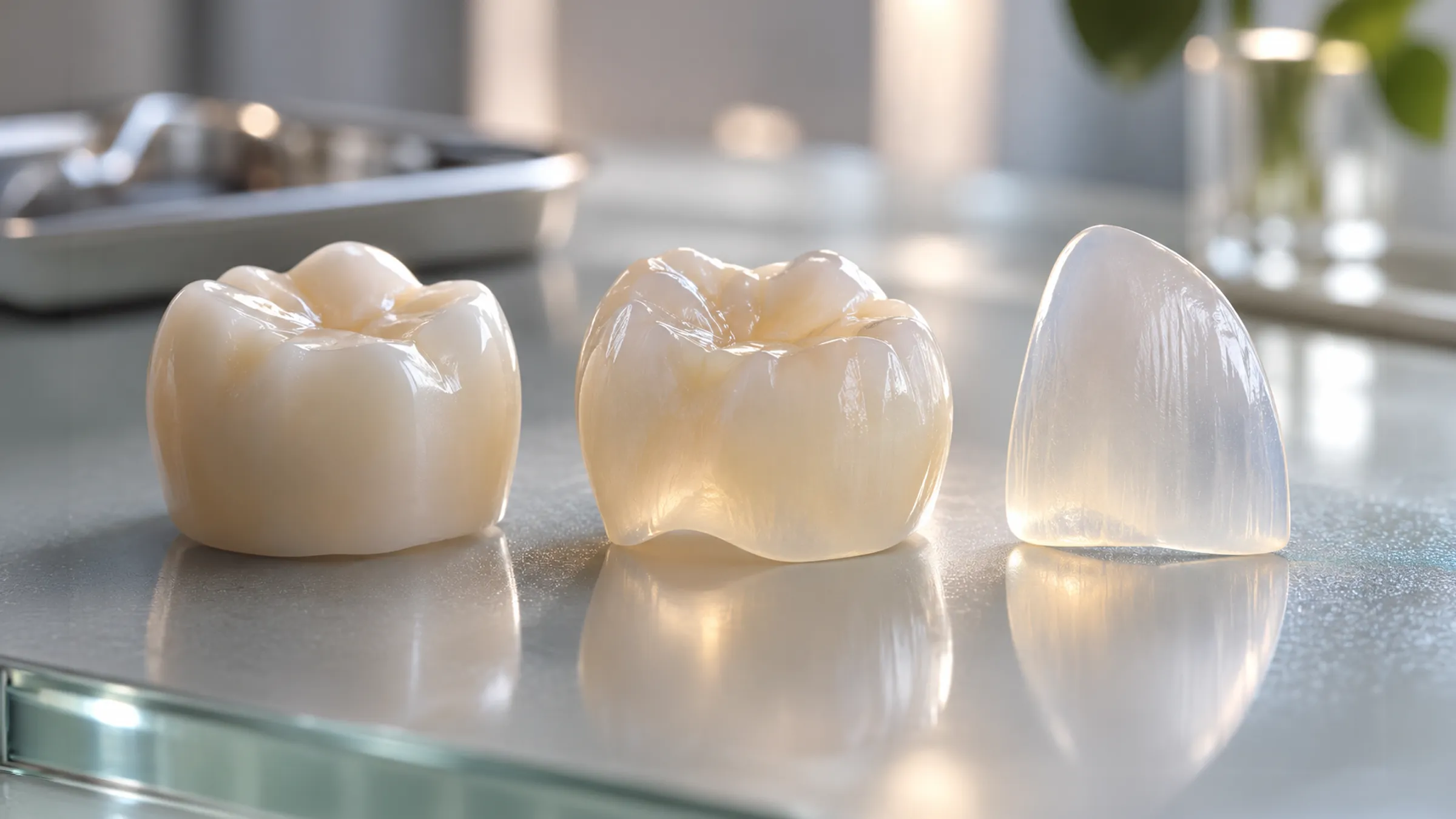
Zirconia is a ceramic material used to make these crowns. It is often preferred for aesthetic reasons because an appearance close to tooth colour can be achieved and it allows procedures that need no metal framework. The crown is made individually in the dental laboratory from a digital or conventional impression.
When is it preferred?
Dentists may consider a zirconia crown in situations such as the following:
- Protecting teeth weakened by decay, a fracture or a large filling
- Strengthening a tooth after root canal treatment
- Cosmetically renewing teeth whose colour or shape has deteriorated
- A crown placed on an implant that replaces a missing tooth
- Covering the supporting teeth of a bridge, if a bridge is to be made
Which material is chosen varies with the position of the tooth, the chewing load and aesthetic expectations. For some teeth the dentist may consider porcelain, metal-supported ceramic or another material more suitable.
A crown is a question of diagnosis before it is a choice of material: why a tooth needs a crown, and why a particular material is suitable, becomes clear at the examination.
Estelion Medical Editorial Team
How does the process progress?
The process begins with an examination and any necessary imaging. If there is decay or a gum problem, it needs to be treated before the crown. The dentist then prepares the tooth in the right shape for the crown; at this stage some tissue is taken from the tooth and this cannot be reversed. An impression is then taken and the crown is made in the laboratory. In the meantime a temporary crown is often used. When it is ready the crown is fitted to the tooth, and the dentist checks your bite and the fit.
The number of visits needed and the length of time depend on the number of teeth to be treated and the dentist’s plan. The dentist determines the length; if you are coming from abroad, we plan your travel around this schedule.
Comparison with other materials
Zirconia is not the only option. Dentists consider different materials according to the position of the tooth and the need:
- Porcelain crown: Known for its aesthetic appearance; often considered at the front.
- Metal-supported porcelain: A classic option with a metal framework.
- Composite: A tooth-coloured filling material; it may need less tooth tissue to be taken, but may be more prone to wear and staining.
- Zirconia: A material preferred because its ceramic structure resists chewing load and is aesthetic; even so, it may not be suitable for every tooth.
Which is suitable for you is determined by the dentist’s assessment after the examination. Asking your dentist about the advantages and limits of the options helps you make the right decision.
How is the shade chosen?
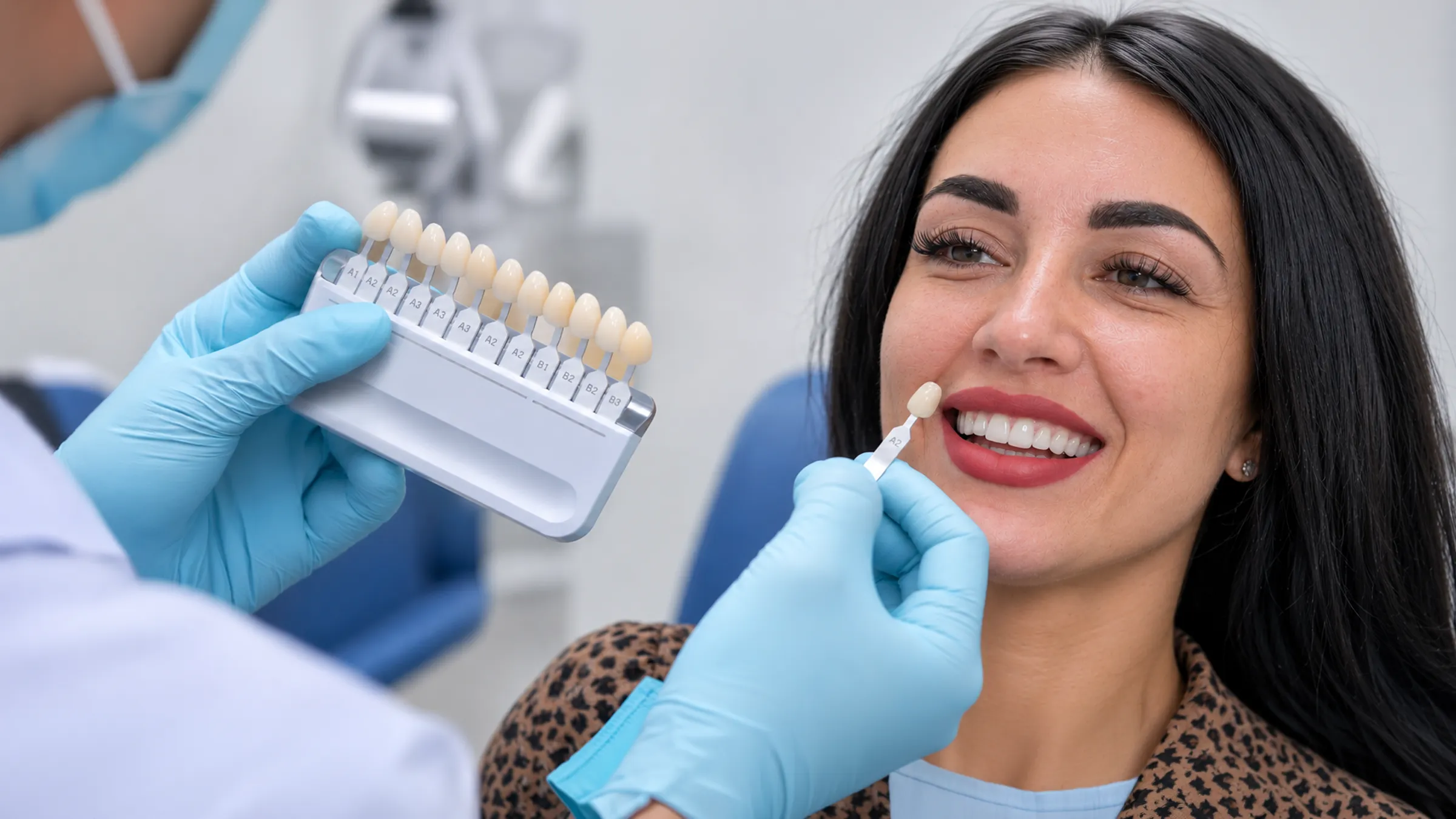
Shade selection is one of the most important parts of the aesthetic result. The dentist and the dental technician determine the tone of your neighbouring teeth by holding a standard shade guide next to your teeth. Because lighting conditions change how colour is perceived, the comparison may be made in different lights.
- Natural look: A tone that matches the current colour of your teeth and your skin tone generally gives a more natural result.
- Describe your expectation: Say whether you want a lighter or a more natural tone, and if possible share example photographs.
- The order of whitening: If you also want to lighten your own teeth, whitening is done before the crown; because the colour of ceramic does not change with whitening afterwards.
All of this should be discussed with your dentist before the crown is made. The tone chosen for one tooth can be noticeable when it does not match the surrounding teeth.
Preparing for the examination
Giving the dentist the following information at the examination helps the plan be made correctly:
- Which tooth is bothering you, and for how long?
- Treatment previously done on that tooth (a filling, root canal treatment, an old crown)
- Whether there is sensitivity to hot, cold or when chewing
- The medication you take, your allergies and your general health
- Your aesthetic expectation: natural, lighter, more even?
If possible, share current photographs of your teeth and, if you have them, your latest X-rays with your patient advisor. This information helps the dentist carry out a preliminary assessment; the final plan is settled after the examination.
What to bear in mind before deciding
- Oral health: Gum disease and decay should be treated before a crown.
- Clenching and grinding: This habit can put load on the crown. Be sure to tell your dentist; a protective splint may be recommended if needed.
- Irreversibility: Because tooth tissue is taken for a crown, the procedure cannot be undone afterwards.
- Wear, fracture, loosening: Every restoration may need care, repair or replacement over time.
- Care: Teeth with crowns also need regular brushing, floss and check-ups.
Care and follow-up
Crowns need care like natural teeth. The health of the crown depends on the health of the tooth beneath and the gum around it. Brushing twice a day, using floss or interdental brushes and going to regular dentist check-ups are important. Ask your dentist about avoiding biting very hard foods (such as ice and hard nutshells) and about using a protective splint if you clench at night.
Over time a crown may crack, wear or loosen; in this case you should listen to your dentist’s recommendation for repair or replacement. It is also useful to have regular check-ups with your own dentist after you return to your country.
Questions you can ask your dentist
- Why are you recommending a crown for this tooth, and is there another option?
- Which material and brand will be used, and why was this material chosen?
- How much tissue will be taken from my tooth?
- How many appointments will the process take, and will there be a temporary crown?
- How should I care for it, and how are check-up appointments planned?
Preparing these questions in writing means you do not miss anything important at the examination.
What should you expect from zirconia crowns in Istanbul?
Treatments are carried out at our clinic. In the first step your patient advisor meets you, and you can share your X-rays and health information for the preliminary assessment. After the examination in Istanbul, the dentist explains the material and plan suitable for you. The brands used include dental ceramic manufacturers such as Ivoclar; you can settle with your dentist which material will be included in the plan.
You can reach us with your questions on the phone number +90 530 309 13 06 or the WhatsApp line +90 531 229 02 43. Your patient advisor can communicate in 16 languages; the airport welcome, hotel and transfer planning and follow-up after treatment are also part of the process.
Frequently asked questions
Are zirconia crowns suitable for every tooth?
No. The dentist determines the suitable material according to factors such as the condition and position of the tooth and the chewing load.
Is tooth tissue removed when a crown is made?
Yes. The tooth needs to be prepared for a crown, and this cannot be reversed. Your dentist will explain the details at the examination.
This article is for general information only and does not replace a diagnosis or treatment recommendation. Suitability for treatment and your treatment plan are determined after a dental examination.

Author
Estelion Medical Editorial Team
Estelion Medical