
Last updated:
Short answer
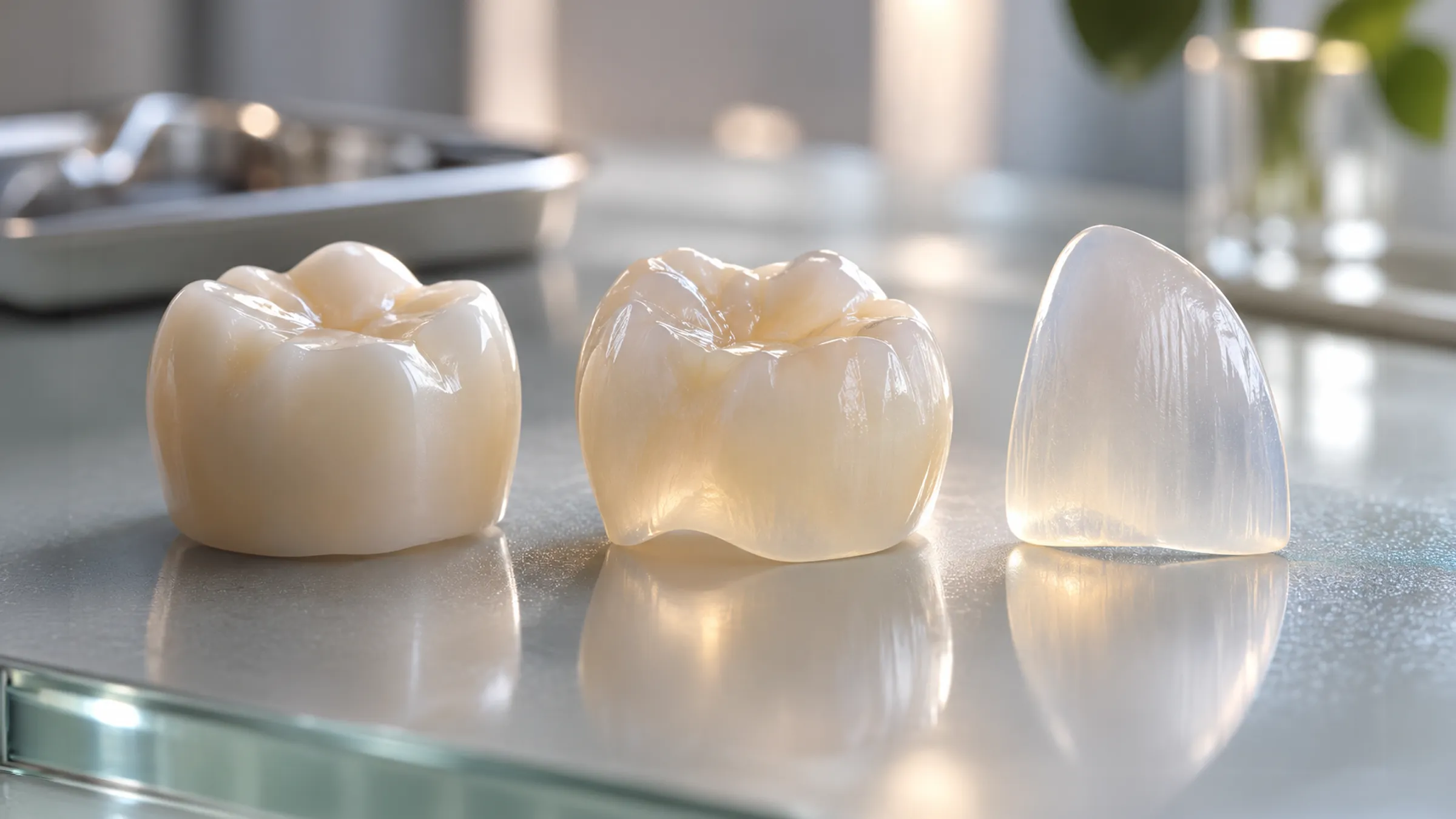
A porcelain veneer is a thin ceramic shell, made individually and applied to the front surface of a tooth only. It may be considered for people who are unhappy with their smile because of colour, shape or small irregularities. Suitability depends on tooth and gum health, the bite and habits, and is determined after a dental examination.
Porcelain veneers are an option often mentioned in cosmetic dental treatment. You may have heard them described on social media and by people around you as "thin shells fitted to the teeth". In this article we explain in plain language what a porcelain veneer is, when it is considered, who it may not suit and what awaits you in the process.
What is a porcelain veneer?
A porcelain veneer is known abroad as a "veneer". The American Dental Association (ADA) defines veneers as custom-made, natural-looking coverings, made of high-quality dental material, placed on the front of the teeth. Unlike a crown, it does not surround the whole tooth; it covers only the front surface. In Turkish it is also called "yaprak porselen" (leaf porcelain).
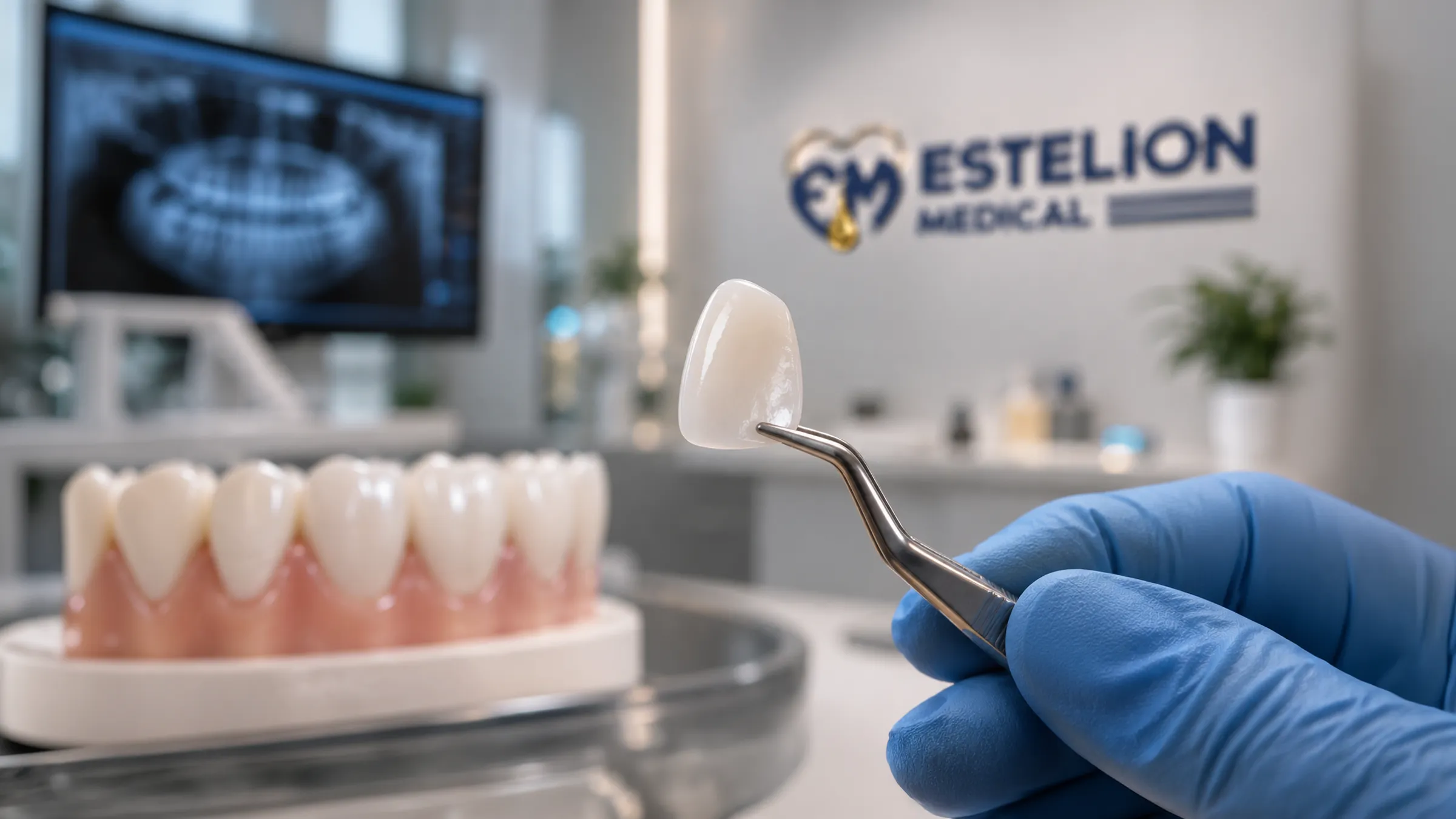
A veneer is prepared in the dental laboratory to the measurements of your tooth and bonded to the tooth by the dentist. It comes in two main types: porcelain (ceramic) and composite. A porcelain veneer is made in the laboratory; a composite veneer is made by the dentist shaping tooth-coloured filling material directly onto the tooth.
Who are porcelain veneers suitable for?
According to the ADA, veneers can improve the appearance of teeth that are broken or chipped, stained, crooked or irregularly shaped, and can cover small gaps in the smile. In general, dentists consider veneers among the options in the following situations:
- Colour changes that do not reach the desired level with whitening
- Small fractures, cracks or wear on the front surface of a tooth
- Slight gaps between the teeth
- Teeth whose shape or length looks out of harmony with the other teeth
- Slightly irregular alignment (where orthodontic treatment is not needed)
This list is not a decision on suitability. Two people with the same complaint may be recommended different treatments; because the decision is made not only on appearance but on the health of the tooth, the bite and chewing habits.
Dental and gum health first
The ADA stresses that problems such as decay or gum disease should be treated before veneers are made; veneers placed over unhealthy teeth can make existing problems worse. In other words, a veneer is a step that often comes up after gum and decay treatment.
When might a veneer not be suitable?
A veneer is not the right solution for every smile. Dentists may consider another method more suitable in the following situations:
- Clenching or grinding: The ADA states that veneers may not be a suitable option for people who clench or grind their teeth and those with a deep bite.
- Teeth with large fillings or that are weakened: If more than the front of the tooth is damaged, a full crown may be more suitable. On this, you can look at our article on zirconia crowns.
- Marked crowding: If there is a serious problem with the alignment of the teeth, an orthodontic assessment may be needed first.
- Untreated oral health problems: Decay, gum inflammation or gum recession should be dealt with first.
How does the porcelain veneer process progress?
The general flow the ADA describes is as follows: the dentist first prepares the tooth by removing a small amount of enamel from the front and side surfaces. An impression is then taken, or a three-dimensional model is made with a digital scanner. This information is sent to the laboratory and the dental technician makes the veneer specially for your tooth. A temporary veneer may be used in the meantime. When the veneer is ready, its fit and shape are first checked on the tooth, any necessary corrections are made, the teeth are cleaned and the veneer is bonded to the tooth.
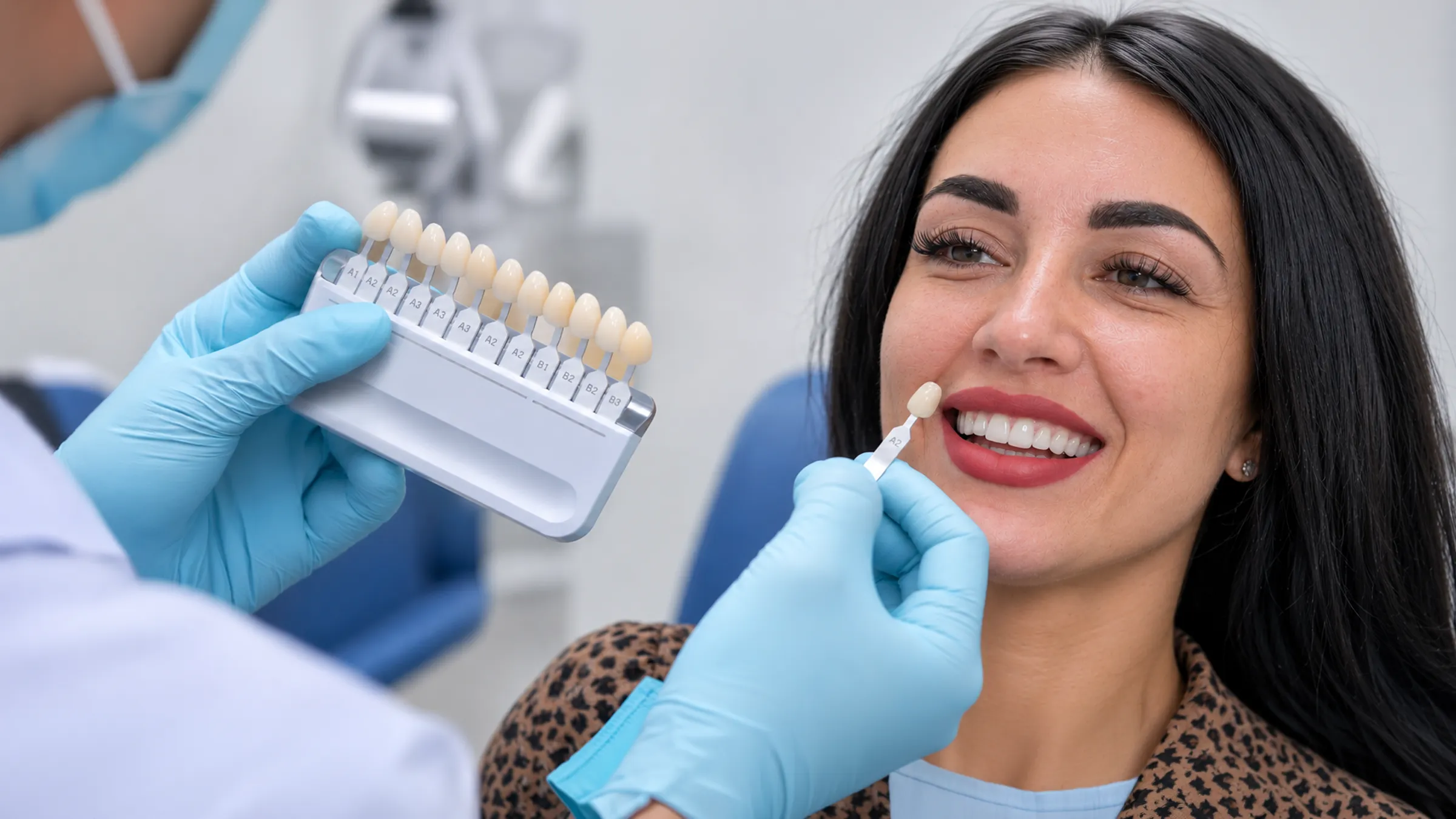
At every stage, shade selection is also carried out. The dentist and technician determine with you the shade that suits your neighbouring teeth and your face. We also covered the subject of shade in our smile design article.
The number of appointments and the length of time needed depend on how many teeth are treated and the dentist’s plan. If you are coming from abroad, our team helps you make your travel plan around this schedule.
It is a treatment that cannot be reversed
For the veneer to be bonded, a certain amount of enamel is removed from the surface of the tooth. The ADA specifically states that veneer treatment cannot be reversed because enamel is removed. So it helps to ask your dentist the following before deciding:
- How much tissue will be taken from my tooth?
- Is there an option that needs less intervention (whitening, composite, orthodontics)?
- What is done if the veneer eventually has to be replaced?
The difference between porcelain and composite veneers
According to the ADA, porcelain veneers are durable and natural-looking; however, they are generally seen as the more expensive option. Composite veneers may need less enamel removed and fewer appointments, and are easier to repair when damaged; but they are not as resistant to stains and wear as porcelain. Which is suitable for you is determined by the dentist according to your aim and your tooth structure.
It is common for people to confuse veneers with crowns, E-max or zirconia. To compare these options, you can see the article in which we explain the differences between zirconia, E-max and veneers.
Care after veneers
Teeth with veneers need care like natural teeth. The health of the tooth underneath and of the gum around it directly affects the health of the veneer. The following are taken care over:
- Brushing twice a day and using floss or interdental brushes daily
- Regular dental check-ups
- Avoiding habits such as biting your nails, biting pens and chewing ice
- If you clench at night, using the protective splint the dentist recommends
The ADA states that a veneer can crack, wear or come loose over time, and that in this case rebonding, repair or replacement may be needed. In other words, a veneer is not a procedure to be done once and forgotten.
A veneer does not change the colour of the teeth afterwards. If you want to lighten the surrounding natural teeth, whitening should be planned before the veneers. We described this in detail in our whitening methods article.
Common misunderstandings
"Veneers straighten the teeth, so orthodontics is unnecessary." This is not always so. Veneers change appearance; they do not correct the position of the teeth in the bone or the bite. If there is a marked alignment problem, the dentist may first explain the orthodontic option.
"Everyone’s veneers look the same." For a natural result, veneers are designed individually according to measurements such as the size of the tooth, the line of the face and how much of the tooth shows when smiling. They should not be thought of as a ready-made mould.
"If there is a problem, they can easily be taken back." Because tooth tissue is removed, the procedure cannot be reversed; even if the veneer can be replaced afterwards, the tooth’s own surface cannot be restored to its original state.
"The result I saw on social media will be the same for me." The look achieved in someone else’s mouth is not a yardstick for you. A sounder route is to talk about your expectation with the dentist and ask for a written plan.
How should you prepare for the examination?
Giving the dentist the following information at the examination helps the plan be set up correctly:
- What do you want to change in your smile, and why?
- Have you had fillings, root canal treatment or crowns on your teeth before?
- Do you have a habit of clenching, grinding or biting hard objects?
- What medication do you take, what are your allergies and what is your general health?
- Are there smile examples you like? How well they would suit your face and your teeth is assessed together with the dentist.
If you share your current photos of your teeth and, if you have them, your latest X-rays with your patient advisor, the dentist can begin a preliminary assessment. The final plan is always settled after the examination.
What should you expect from veneers in Istanbul?
Treatments are carried out at our clinic. The first step is for the dentist to examine your mouth and carry out any necessary imaging. The veneer plan is settled according to this assessment; if veneers are not suitable for you, the dentist explains other options. For the general framework, you can look at our smile design and zirconia crowns pages, and to understand the process, our article how to get started. If you are wondering which treatment is suitable for you, our article which treatment is suitable may guide you.
Frequently asked questions
Are porcelain veneers suitable for every tooth?
No. The health of the tooth, the condition of the gums, the bite and habits such as clenching affect suitability. The decision is made after a dental examination.
Is tooth tissue removed for a veneer?
Yes. A small amount of enamel is removed from the front of the tooth so that the veneer can be bonded, and so the procedure cannot be reversed. Your dentist will explain the details at the examination.
Does whitening work after veneers are placed?
Whitening works only on natural teeth; it does not change the colour of veneers and crowns. If you want to lighten your natural teeth, whitening is usually planned before veneers.
This article is for general information only and does not replace a diagnosis or treatment recommendation. Suitability for treatment and your treatment plan are determined after a dental examination.

Author
Estelion Medical Editorial Team
Estelion Medical