
Last updated:
Short answer
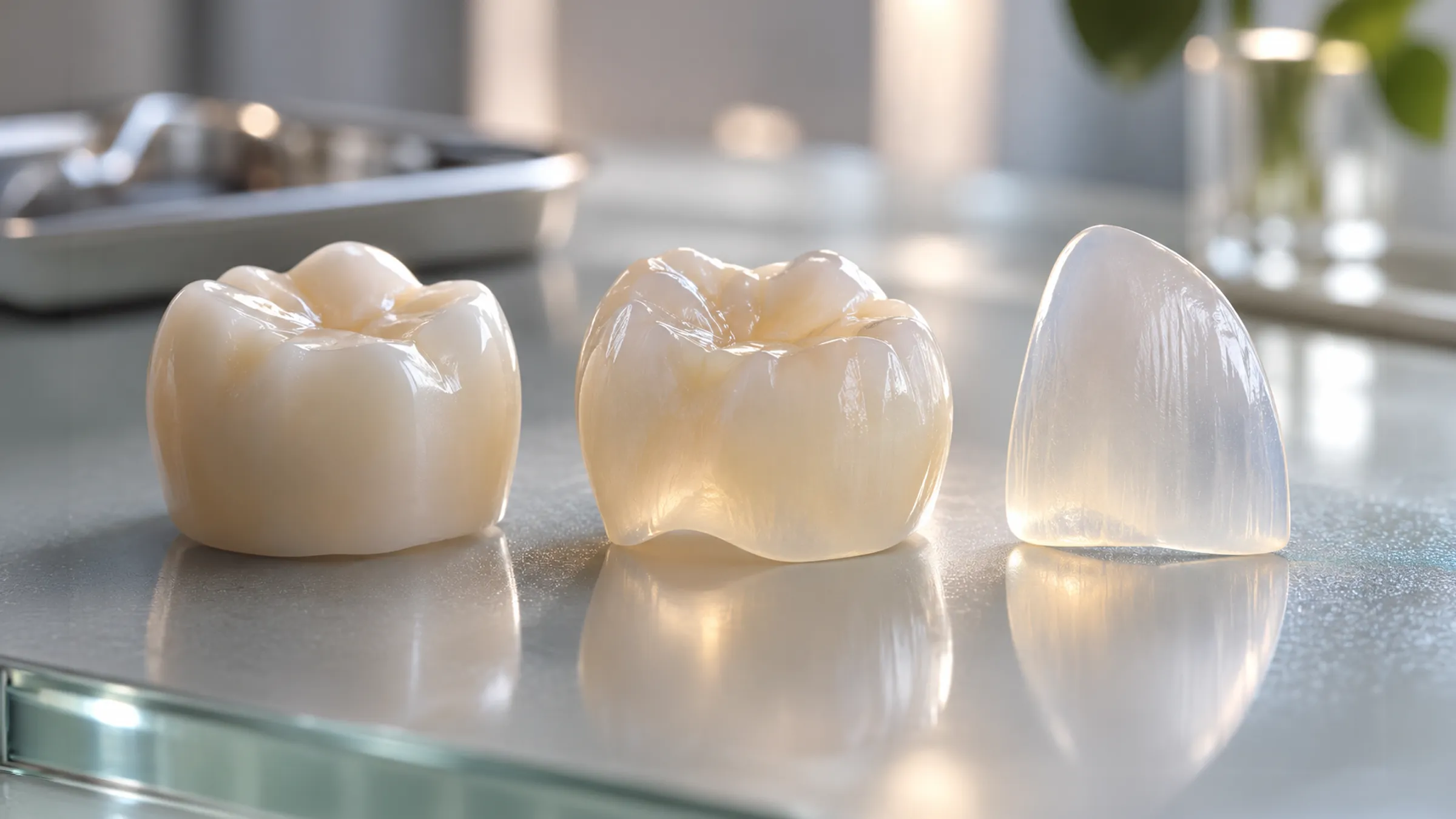
Zirconia and E-max are each a ceramic material; a veneer is a type of thin covering applied only to the front surface of a tooth. Zirconia is generally known for its durability and E-max for its ability to let light through. Which is suitable is determined at the dental examination according to the position of the tooth, the chewing load and your expectations.
"Should I have zirconia, E-max or a veneer?" is one of the questions asked most often by patients researching cosmetic dental treatment. Often these three terms are compared on the same level; yet one is a material, one is another material and one is a way of applying treatment. In this article we explain the difference between zirconia, E-max and veneers clearly, and explain which criteria decide the choice.
What is the difference between zirconia, E-max and veneers?
First let’s separate the terms:
- Zirconia: A ceramic material. It is used in crowns that surround the whole tooth and in bridges. It allows procedures that need no metal framework.
- E-max: The trade name of a material from the glass-ceramic group containing lithium disilicate. It can be used in crowns, veneers and similar restorations.
- Veneer: Not a material but a way of applying treatment. It is a thin shell applied only to the front surface of the tooth. It can be made from ceramics such as porcelain or E-max, or from composite material.
In other words, the real meaning of "zirconia or veneer?" is often "will the whole tooth be covered, or only its front surface?" The choice of material comes after that.
Full crown or veneer?
The American Dental Association (ADA) states that a crown covers a tooth to restore its normal shape and size, and can be used to strengthen teeth with large fillings, protect a weak tooth, repair a broken tooth, cover discoloured or irregularly shaped teeth and cover an implant. A veneer, unlike a crown, covers only the front surface of the tooth.
In practice this difference means the following:
- If most of the tooth is sound and the problem is only in appearance (colour, a small defect of shape), a veneer may come up.
- If the tooth is weakened, has a large filling or has had root canal treatment, a covering that surrounds the whole tooth may be more suitable.
For details on veneers, you can see our article on porcelain veneers.
The strong points of zirconia
Zirconia is a ceramic generally known for its resistance to chewing load. For this reason it is an option dentists often consider, especially in back teeth and bridge work. Modern types of zirconia offer an appearance close to tooth colour; even so, translucency varies with the type of material and in some cases it may not give the same sense of depth as natural enamel.
For detailed information, you can see our article what are zirconia crowns. You can also reach our treatment page here.
The strong points of E-max
Because E-max can let light through in a way similar to natural enamel, it is often chosen where aesthetic expectations are high, especially in front teeth. It can be used both as a veneer and as a single-tooth crown. On the other hand, in areas with a high chewing load or in long bridges it may not always be a suitable option; this decision depends on the dentist’s assessment.
A brief comparison
- Zirconia: Durability to the fore; often considered for back teeth and bridges. It requires the whole tooth to be covered.
- E-max: Aesthetics and translucency to the fore; often considered for front teeth. It can be in the form of a crown or a veneer.
- Veneer: Tooth tissue is taken only from the front surface. The structure of the tooth must be sound enough.
This comparison is a general framework, and there are exceptions for every material. A personal recommendation can only be made after an examination.
The criteria that decide the choice
The position of the tooth and chewing load
Front teeth are where aesthetics matter more, and back teeth where chewing load matters more. Even in the same person, different materials may be chosen for front and back teeth.
Clenching and grinding
The ADA states that veneers may not be a good option for people who clench or grind their teeth. This habit puts load on all ceramic restorations; so it must be told to the dentist. A protective splint may be recommended if needed.
The current condition of the tooth
How much of the tooth is sound, whether it has had root canal treatment or a large filling before, its colour and the condition of the gum affect the plan. If there is decay or a gum problem, these need to be treated before cosmetic work.
Colour and expectation
The colour of the neighbouring teeth, the shade you want and your facial structure play a part in the choice of material. Ceramic restorations cannot be whitened afterwards; if you want to lighten your natural teeth, whitening needs to be done first. Our article teeth whitening methods can help with this.
What the three options have in common
Whatever the material, some points do not change:
- Irreversibility: Tooth tissue is removed for a crown or veneer. The ADA states that veneer treatment cannot be reversed because enamel is removed; the same applies to a full crown, and the amount of tissue taken during preparation may be greater.
- The need for care: All restorations need brushing twice a day, floss and regular dentist check-ups. If the tooth and gum underneath are not healthy, problems can arise whatever the material.
- The possibility of renewal over time: Cracking, wear, loosening or colour mismatch may be seen; repair or replacement may be needed.
- Fit between dentist and laboratory: The result depends not only on the material but also on the quality of the impression, the design and the bonding.
How does the process progress?
The flow is similar for all three options. First an examination and any necessary imaging are carried out; if there is decay or a gum problem, it is treated. The teeth are then prepared, an impression is taken or a digital scan is made and the restoration is made individually in the laboratory. In the meantime a temporary restoration is often used. When it is ready, the fit and colour are checked, the bite is reviewed and the restoration is bonded in place. The number of appointments and the length of time vary with the number of teeth and the dentist’s plan. If you are coming from abroad, we put together the travel schedule with you around this plan.
Common mistakes when deciding
The first is making the material the sole criterion for deciding. The same material may be suitable for one tooth and not for another. The second is applying someone else’s experience to your own mouth; every mouth is different. The third is making a firm decision on material from a photograph alone, without an examination. Photographs are useful for a preliminary assessment, but the final plan is settled by a clinical examination and any necessary imaging. The fourth is deciding without asking how much tooth tissue the procedure to be carried out will need.
What does the scientific evidence say?
There are peer-reviewed studies comparing lithium disilicate and zirconia restorations; however, a common conclusion is not "one material is superior in every case". For example, a systematic review and meta-analysis published in the journal Cureus states that information on the medium- and long-term clinical performance of zirconia and lithium disilicate crowns and bridges made with computer-aided design and manufacturing (CAD/CAM) is limited. So claims of definite superiority you see online should be approached with caution; what really decides is the right choice of case and the quality of the dentist’s work.
Questions you can ask your dentist
- Why do you recommend this material for my tooth, and what are the alternatives?
- How much tissue will be taken from my tooth, and can the procedure be reversed?
- Does my habit of clenching affect the choice of material?
- If the restoration cracks or loosens, what is the route?
- Will the plan be given to me in writing?
The decision process in Istanbul
Treatments are carried out at our clinic. You can share your photographs and, if you have them, your X-rays with your patient advisor; a dentist carries out a preliminary assessment from them. The material and method are settled after the examination in Istanbul. If you would like to approach the smile as a whole, our article how is a smile design planned and our smile design page can guide you. If you are curious in more general terms about which treatment is suitable for you, you can look at our article which treatment is suitable.
Frequently asked questions
Is a veneer a material?
No. A veneer is a type of thin covering applied only to the front surface of the tooth. It can be made from ceramics such as porcelain or E-max, or from composite.
Is zirconia or E-max more suitable?
Neither is superior to the other in every case. The position of the tooth, the chewing load, any clenching habit and aesthetic expectations are taken into account; the decision belongs to the dentist.
Can different materials be used in one mouth?
Yes. Because front and back teeth have different needs, different materials may be recommended for different teeth in the same person. The plan is settled after the examination.
This article is for general information only and does not replace a diagnosis or treatment recommendation. Suitability for treatment and your treatment plan are determined after a dental examination.

Author
Estelion Medical Editorial Team
Estelion Medical