
Last updated:
Care after an implant is similar to caring for your teeth but more careful: daily brushing, cleaning between the teeth, check-ups at the intervals your dentist recommends and staying away from risk factors such as tobacco. If plaque builds up around an implant, gum inflammation and bone loss can develop; so the care instructions your dentist gives are essential.
Implant treatment does not end with placing the implant or fitting the prosthesis. The cleaning and check-ups in the period afterwards are aimed at protecting the health of the tissue around the implant. In this article we describe the general framework. Your personal care programme is determined by your dentist.
Why does implant aftercare matter?
As around natural teeth, plaque builds up around an implant. The 2017 World Workshop consensus report on peri-implant diseases states that there is strong evidence that peri-implant mucositis (inflammation of the gum around the implant) is plaque-induced. Peri-implantitis is a plaque-associated condition with inflammation in the tissues around the implant and progressive bone loss. Around a healthy implant there is no redness, bleeding on touch, swelling or pus. For this reason regular check-ups matter for problems noticed early.
This report offers an informative framework; it does not mean "implants will definitely cause problems". By carrying out care correctly and not missing check-ups, you can reduce your risk.
The first days after surgery
In the first days, following the dentist’s written instructions is the most important step. The following are generally discussed:
- Taking the medication the dentist prescribes as directed
- Not poking at the surgical area with your tongue, fingers or a brush; brushing as the dentist shows you
- Avoiding hard, hot or very hard foods and following the diet the dentist recommends (the ADA states that soft, cold foods and warm soup may be recommended during healing)
- Staying away from tobacco products. According to the ADA, tobacco can slow healing.
- Telling the team if there is swelling, bleeding or pain
Details such as rinsing the mouth, applying ice or how long to take medication vary with the person and the procedure; rely only on the information your dentist gives you. You can read what is felt during treatment in the article what you feel during implant treatment.
Daily cleaning
After the healing period, care follows the same logic as for natural teeth, but special attention is needed around the implant and under the prosthesis. The NHS recommends brushing twice a day for about two minutes with fluoride toothpaste, and the ADA recommends using floss once a day. These recommendations are for general oral health; for implants your dentist may also recommend special tools and techniques.
- Brushing: Twice a day, with a soft or medium brush, cleaning all surfaces. An electric or manual brush makes no difference; according to the NHS, what matters is cleaning every surface well.
- Between the teeth: Tools such as floss and interdental brushes remove plaque from around the teeth and around the implant. Ask your dentist or hygienist which suits you.
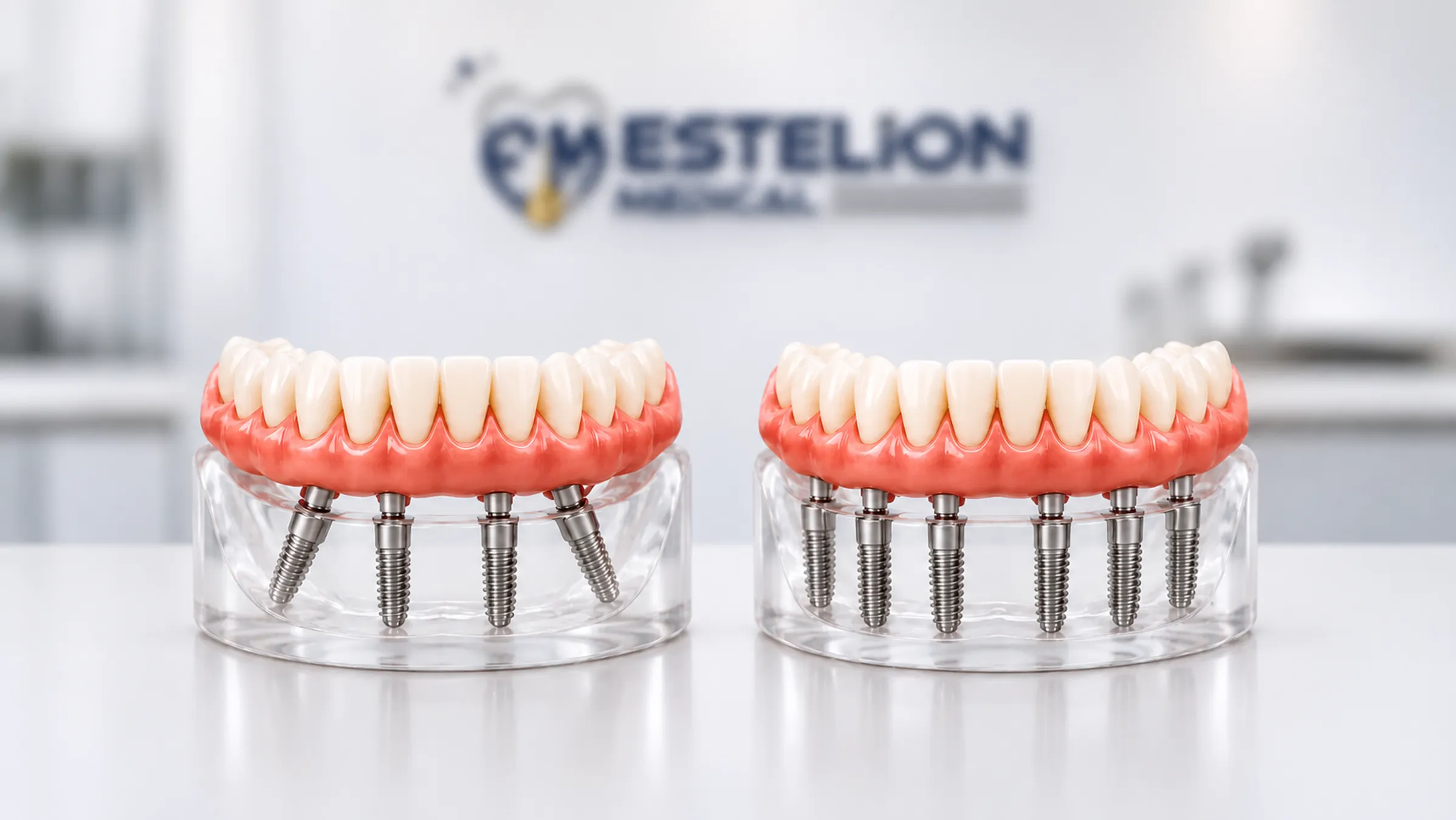
- Under the prosthesis: For fixed prostheses (such as All-on-4 and All-on-6), special tools may be recommended for the underside of the prosthesis and around the implants.
- Removable denture: Removable prostheses such as overdentures are cleaned every day; the ADA and NHS recommend brushing dentures every day and cleaning the gums too. The NHS says dentures should not be cleaned with toothpaste.
Products such as a water flosser, special interdental brushes or mouthwash are used on your dentist’s recommendation; not every product is suitable for every person.
Check-ups: how often, and what is looked at?
The check-up interval varies from person to person; the dentist sets it according to your risk status. At check-ups the dentist generally looks at the health of the gum around the implant, the condition of the prosthesis, the balance of the bite and, if needed, an X-ray. The peri-implant consensus report recommends that, once the implant prosthesis is complete, a baseline radiograph and a measurement record are taken, so that changes over time can be compared.
If you want to arrange a check-up programme with your dentist in your own country, it helps to keep the implant information document you will be given at the end of treatment. We have covered this in our article on choosing an implant brand, and on follow-up in the article who will I be in contact with after I return to my country.
Risk factors to watch for
- Tobacco: The ADA states that tobacco use can slow healing. You can ask your dentist for support in stopping.
- General health: Chronic conditions such as diabetes can affect healing (ADA). Tell the dentist about changes to the medication you take.
- Clenching and grinding: This can put additional load on implants and prostheses; your dentist may recommend a protective splint (a night guard).
- Hard objects: Chewing things such as ice, bones and hard-shelled nuts can damage prostheses; listen to your dentist’s dietary advice.
- Putting off check-ups: Small problems can grow if they are not noticed early.
Aftercare questions you can ask your dentist
- Which toothbrush and interdental product do you recommend for my prosthesis?
- How do I clean under the prosthesis at home?
- How often should I have check-ups?
- Do I need a night guard (protection against clenching)?
- At which symptoms should I call you straight away?
Signs to tell your dentist about straight away
- Redness, swelling or bleeding on touch around the implant (counted among the signs of inflammation in the peri-implant report)
- Pus coming from around the implant
- Loosening, fracture or a crack in the prosthesis
- Discomfort when biting or a feeling that the implant moves
- Persistent pain or fever
In such a case, contact your dentist or our team without waiting. It is reassuring to learn from the start which dentist to contact and by what route. We have described the process in Istanbul and afterwards in our travel guide.
The first weeks, by type of prosthesis fitted
In treatments where you go home with a temporary prosthesis, the chewing load on the prosthesis may be limited by the dentist in the first weeks; after the final prosthesis is fitted, a new period of getting used to it begins. During this time there may be a difference in the feeling of biting, small changes in speech or sensitivity in the gum. If symptoms last longer or increase, tell the dentist without waiting for the check-up appointment.
Diet and habits
In the first weeks it is important to keep to the soft diet the dentist recommends; how fast you return to a normal diet afterwards is determined by your dentist. Sugary and sticky foods can increase plaque build-up; so brushing and cleaning between the teeth should not be neglected. Habits such as biting your nails, chewing pens or opening packets with your teeth also put additional load on the prosthesis and the area around the implant.
Common misunderstandings
- "An implant doesn’t decay, so no care is needed." An implant does not decay, but the gum and bone around it are open to plaque-related inflammation; that is why care is needed.
- "If there is no pain, there is no problem." Inflammation around an implant can sometimes begin without causing marked discomfort; that is why dentist check-ups are important.
- "I can’t clean a fixed prosthesis." Cleaning at home is possible with the right tools; your dentist shows you how.
- "You have to go back to the country for check-ups." Check-ups can also be planned with your dentist in your own country; you can talk to your patient advisor about this.
When you return to your country
If you will see your dentist in your own country for a check-up after treatment, it helps to show them your treatment summary, the brand and model of the implant and any X-ray records. Your patient advisor explains how the necessary documents will be sent to you. The dentist can set your care programme and check-up interval from these documents. For the flow of the first day and afterwards, you can also look at the article the first day of treatment in Istanbul.
Differences in care by type of prosthesis
A single implant and crown, short bridges, removable overdentures and fixed full-arch prostheses need different care. For a single-tooth implant, care is similar to that for natural teeth; for fixed full-arch prostheses, tools that reach under the prosthesis are used. To compare the options, you can see the articles on missing tooth treatment and options in complete tooth loss. Our treatment pages: implants, All-on-4 and All-on-6.
This article is for general information only; your personal care programme is determined by your dentist.
Frequently asked questions
Do implants decay, and is care needed?
The implant itself does not decay; however, the gum and bone around it are open to plaque-related inflammation. For this reason daily cleaning and regular check-ups are needed; your dentist determines your personal programme.
How often are check-ups carried out after an implant?
The check-up interval varies with the person, the type of prosthesis and risk status. Your dentist sets a suitable schedule for you; after you return to your country you can also talk to your patient advisor about your check-up plan.
Which signs should I tell my dentist about straight away?
If there is redness, swelling, bleeding or pus around the implant, loosening or fracture of the prosthesis, persistent pain or fever, contact your dentist or our team without waiting.
This article is for general information only and does not replace a diagnosis or treatment recommendation. Suitability for treatment and your treatment plan are determined after a dental examination.

Author
Estelion Medical Editorial Team
Estelion Medical